


The most economical approach to operating a diesel is simultaneously the quickest route to destroying it. Brief journeys, soft driving, minimal revs and shifting up early all appear to conserve fuel, yet the presenter claims they stealthily damage the priciest components of a contemporary diesel engine. The repair cost begins above $1,500, and for certain vehicles it exceeds the vehicle’s own worth. A new particulate filter costs between $1,500 and more than $4,000 for most vehicles, and the presenter mentions that certain German models are substantially pricier. The harm accumulates unnoticed, since the vehicle provides no indication until the damage is already inflicted. The encouraging aspect of the walkthrough is that a single weekly routine, lasting about 20 minutes, undoes the majority of it.
The Main Claims About Short Trips and Diesel Damage
| The claim | What the presenter offered as support | How firmly it was said |
|---|---|---|
| Short trips clog the particulate filter because the exhaust never gets hot enough | Exhaust needs roughly 350 to 500°C for passive regeneration; a 5-minute drive barely warms it | Flat |
| Interrupting a regeneration leaves extra soot and traps the car in a cleaning loop | The cycle needs 10 to 20 minutes of continuous driving to finish | Flat |
| Failed regenerations leak fuel into the engine oil | Fuel washes past the piston rings; over 5% dilution is treated as serious | Flat |
| Driving gently at low revs makes soot worse, not better | Heavy load at low RPM creates dirty combustion and black sludge in the EGR and intake | Flat |
| Idling is slow-motion damage, not a harmless warm-up | Idle exhaust sits around 200 to 300°C at best | Flat |
| A weekly 20 to 30 minute highway drive fixes most of it | Sustained heat lets the filter regenerate passively | Flat |
Why Short Trips Kill the Particulate Filter
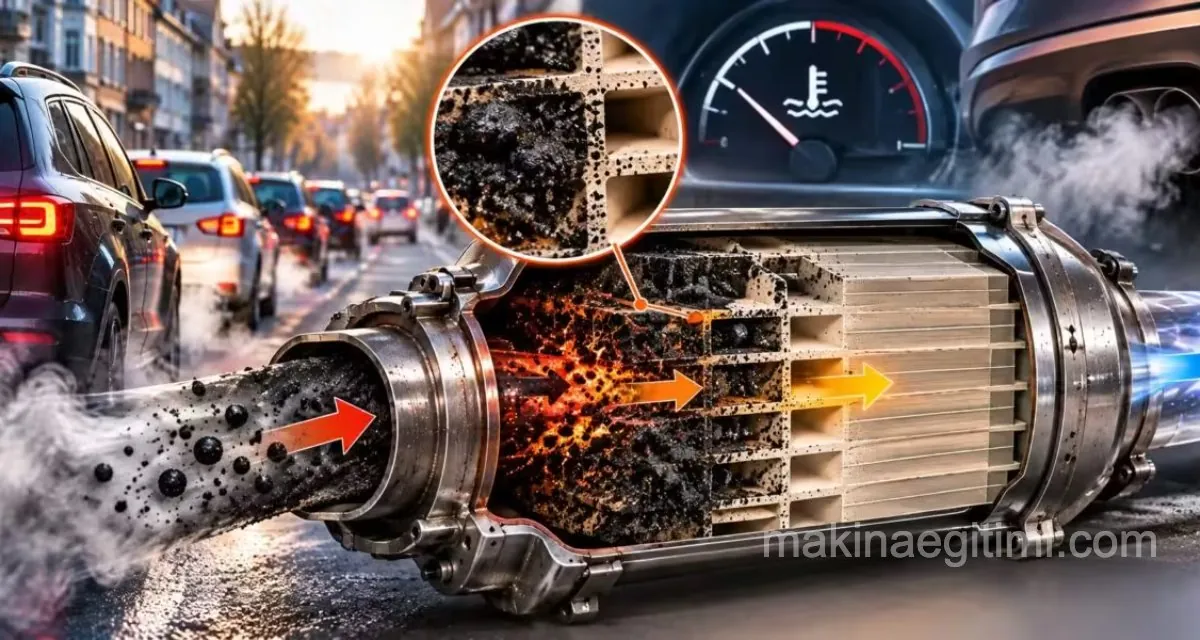
All contemporary diesels contain a particulate filter within the exhaust system, known as the DPF. Its function is straightforward. It captures soot so that the soot doesn’t exit via the tailpipe. However, a filter that merely captured would block within days, so the engine combusts the soot away through a procedure known as regeneration.
That procedure has a single prerequisite the presenter labels absolutely essential: heat. Substantial heat. Passive regeneration, the type that occurs automatically at highway velocities, requires exhaust temperatures of about 350 to 500°C, equivalent to roughly 650 to 900°F. During a 5-minute commute, the exhaust hardly warms up. The soot fails to combust. It accumulates, journey after journey, coating upon coating.
The engine’s control unit isn’t foolish, as the presenter phrases it. Once the filter becomes loaded, it retaliates. It initiates active regeneration, adding additional fuel to elevate the exhaust to approximately 600°C and combust the soot away. Observe what occurred there. The fuel-conserving routine compelled the engine to consume additional fuel to rectify the mess that very routine produced. Nothing was conserved. The expense merely relocated, and additional deterioration was introduced.
Therefore the vehicle possesses a self-cleaning mechanism. Issue resolved? Not exactly. The cleaning procedure contains a flaw, and the presenter claims nearly every motorist activates it unknowingly. Active regeneration requires 10 to 20 minutes of uninterrupted driving to complete. Consider when your everyday journey last provided that.
This is where the subsequent error occurs, and the walkthrough asserts you have nearly certainly committed it this week. You arrive at your driveway. Perhaps the idling seems slightly elevated compared to usual. The radiator fan operates on a chilly day.
A heated odor emanates from the rear of the vehicle. You turn off the engine and proceed indoors. It seems innocuous. What you truly did was halt an active regeneration midway, with soot still in the midst of combusting within the filter.
The control unit attempts once more on your following journey. If that’s another brief excursion, it fails once more. Every unfinished cycle deposits additional soot, and the vehicle becomes stuck in a cycle, perpetually attempting to purge itself and never completing the task. Then eventually the DPF warning indicator illuminates, the engine enters limp mode, and you’re creeping home at reduced power.
At that stage you’re confronting a forced regeneration at a garage, if you’re fortunate. If you’re not, a new DPF for most vehicles costs anywhere between $1,500 and more than $4,000. For certain German models, the presenter states it’s substantially pricier. To contextualize that, it represents years’ worth of the fuel you were attempting to conserve.
How a Clogged Filter Takes Out the Turbo
The filter isn’t even the costly component, as per the presenter. A blocked DPF generates back pressure, and the turbocharger must struggle against it every moment the engine operates. That back pressure hastens bearing deterioration until the turbo breaks down. For a contemporary diesel vehicle, the walkthrough estimates that at readily another $1,500 to $3,000.
So one habit, the short trip, sets off a chain. The filter loads because the exhaust stays cold. The engine burns extra fuel trying to clean it. The driver switches off mid-cycle and leaves the job unfinished. The filter clogs harder. Back pressure builds. The turbo wears out fighting it.
The presenter highlights that this is true whether you operate a Ford F-150, a Volkswagen, a BMW, a Mercedes, a Peugeot, or a diesel SUV. If it was manufactured within the past 15 years, the assertion is that this concerns you. That encompasses a broad range, and it’s intentional. The components follow the same principle across manufacturers, even if the cost of the parts does not.
There’s also a warning about how the problem shows up. The car won’t warn you until the damage is already done. The DPF light, the limp mode, the hot smell, the fan running on a cold day — these are late signals. By the time they arrive, the filter is heavily loaded and the turbo may already be suffering.
The presenter also flags that a forced regeneration at a workshop is the lucky outcome. That means the shop can trigger a burn-off and save the filter. The unlucky outcome is replacement, and that’s where the numbers jump into the thousands.
Between the filter and the turbo, a driver following the short-trip pattern can face a bill that approaches or passes what the car is worth. That’s the trap the walkthrough keeps returning to: the fuel saved on those short drives is tiny next to the repair it feeds.
Fuel Dilution Is the Hidden Problem in Your Oil
This is the problem the presenter said hides where you’d never think to look, and the one thing worth remembering if you remember nothing else. Every failed regeneration leaks fuel into your engine oil.
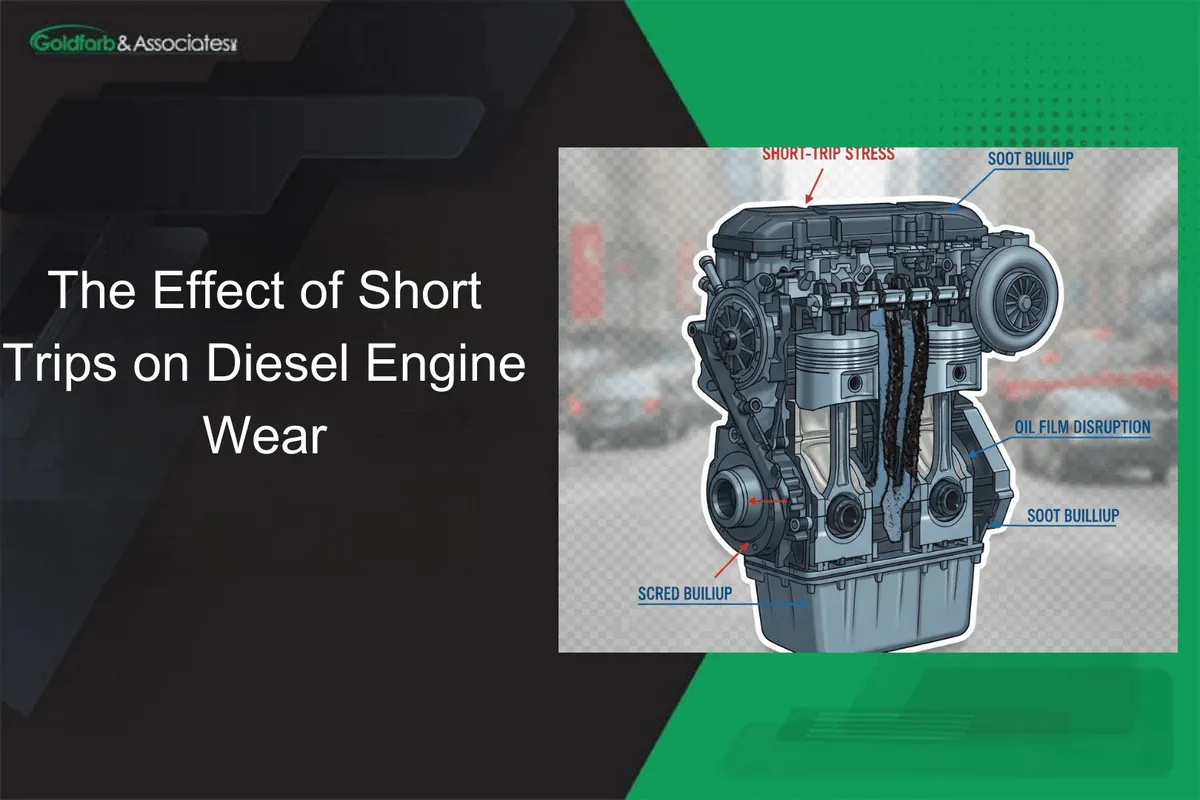
Here is the mechanism. Throughout active regeneration, the majority of automotive diesels introduce fuel late in the combustion cycle deliberately, so it combusts in the exhaust and warms the filter. However, not all of that fuel exits. A portion washes down the cylinder walls, escapes past the piston rings, and trickles into the oil pan. This is termed fuel dilution, and the presenter labels it a silent assassin.
Below approximately 3%, the fuel typically vaporizes away with engine warmth, and no damage occurs. However, when regenerations persistently fail and recur, that figure rises. The majority of manufacturers consider anything beyond 5% a grave issue. Why? Because diesel dilutes your oil. At roughly 4% dilution, a 40-weight oil can degrade to a 30-weight. The oil layer safeguarding your bearings becomes thinner and feebler. The additives deteriorate, and the engine begins consuming itself quietly at every ignition.
Then comes the part that fools everyone. Your oil level goes up, not down. You check the dipstick, see it’s full, and think everything’s fine. Meanwhile, the oil in your engine is part diesel fuel. The presenter says this got so bad on certain diesel cars, with Mazda’s 2.2 diesel named as a famous example, that owners watched the oil level climb past the maximum mark from dilution alone, with low oil pressure warnings to match.
So there’s an action here, and the presenter frames it as something to do today. Check your dipstick. If it ever reads above where you filled it, that’s not a bonus. That’s fuel. Get the oil changed. The worst case is bearing failure, and on a modern diesel car, a bottom end rebuild often costs more than the car is worth. All of it traceable back to short trips and interrupted regenerations.
Why Driving Gently and Idling Make It Worse
At this point you might think the answer is to drive gently and keep the revs low. The presenter says that instinct is the fourth mistake, and your car is actively encouraging it. Somewhere along the way, low RPM became gospel for fuel economy. Shift up early, keep it under 1,500, let the torque do the work. Some cars even have a shift indicator on the dash begging you to grab the next gear.
Diesels do make their power down low, but there’s a line, and eco driving crosses it constantly. When you put your foot down at very low RPM in a high gear, the engine is under heavy load with slow-moving air. Combustion gets dirty.
The injectors deliver fuel the cylinder can’t fully burn, and the leftovers turn into soot — exactly the stuff the DPF is already drowning in. You’re loading the filter faster while driving in the one style that never gets hot enough to clean it. Meanwhile the EGR valve and intake manifold collect that same carbon, coating themselves in black sludge until air flow chokes and the car goes flat.
A diesel wants to work. Load, heat and air flow are what keep the whole system clean. Babying it doesn’t preserve it. It suffocates it.
The last habit on the list is the sneakiest, because it doesn’t involve driving at all. Idling. Sitting on the driveway warming up on a cold morning. Waiting in the car park with the engine running because restarting supposedly wastes fuel. It sounds harmless, even sensible. But at idle, exhaust temperatures sit around 200 to 300°C at best. That’s nowhere near hot enough to keep the aftertreatment system alive.
The filter loads, the fuel washdown gets worse because a cold engine burns fuel incompletely, and unburned diesel starts finding its way into places it should never be, including the oil sump. Long idle time in a modern diesel isn’t neutral. It’s slow-motion damage. The presenter’s instruction is to start it, give it 30 seconds, and drive off gently. That warms it faster and cleaner than any amount of idling.
What the Video Leaves Open
- The presenter says “we’ll get there” about the hidden problem, and the video does reach it, but it never says how a driver measures fuel dilution at home beyond reading the dipstick level. No testing method is given.
- No service interval in miles or months is stated for the extra oil changes. The video says severe short-trip owners often cut the factory interval in half, but it doesn’t say what that factory interval is.
- The video never says what tool or app, if any, shows live exhaust temperature, so a reader can’t know how to confirm the exhaust is hot enough before switching off.
- Nothing is said about who shouldn’t try the weekly highway drive — for example, drivers who can’t reach a motorway, or cars already showing a DPF warning light. The video doesn’t cover what to do if the light is already on.
- The cost of the fix itself is never given. The video prices the failures, not the maintenance, so a reader has no figure for the extra oil change or the weekly drive.
Frequently Asked Questions
What exhaust temperature does a diesel need to burn off soot?
The presenter gives two figures. Passive regeneration, the natural kind that happens at motorway speeds, needs exhaust temperatures of roughly 350 to 500°C, which is around 650 to 900°F. When the engine’s computer decides the filter is loaded, it triggers active regeneration and injects extra fuel to push the exhaust to around 600°C. At idle, by contrast, exhaust temperatures sit around 200 to 300°C at best, which is nowhere near hot enough. That gap is the whole problem with short trips: the exhaust never reaches the range where soot burns, so it just stacks up trip after trip.
How long does an active regeneration need to finish?
The walkthrough says active regeneration needs 10 to 20 minutes of continuous driving to complete. That’s the number to hold onto when you park. If you switch off before the cycle finishes, the soot that was mid-burn stays in the filter, and the computer has to try again on your next drive. If that next drive is another short trip, it fails again. Each incomplete cycle leaves more soot behind. The presenter’s advice is to keep driving until the cycle finishes, and never to switch off mid-regeneration if you can avoid it. The signals that a cycle is running are covered separately.
What are the signs my diesel is doing a regeneration?
The presenter lists several signals to learn on your own car. A higher idle than normal. A deeper exhaust note. The radiator fan running after you park, even on a cool day. A hot smell from the back of the car. Stop-start refusing to work. Fuel consumption suddenly jumping on the trip computer. When you notice any of these, the instruction is to keep driving until the cycle finishes, which takes 10 to 20 minutes. Learning these signs matters because switching off during one of them is exactly how the soot loop starts.
How much fuel in the oil is too much?
Under about 3% dilution, the fuel usually evaporates off with engine heat and no harm is done. Most manufacturers treat anything over 5% as a serious problem, according to the presenter. The damage in between is real too: at around 4% dilution, a 40-weight oil can shear down to a 30-weight, so the protective oil film gets thinner and weaker and the additives break down. The trick is that you can’t see dilution on the dipstick as a low level. The level goes up, not down, because the oil is part diesel fuel. If it reads above where you filled it, that’s fuel, so get it changed.
Does idling warm up a diesel or damage it?
The presenter is clear that idling does damage. At idle, exhaust temperatures sit around 200 to 300°C at best, which is nowhere near hot enough to keep the aftertreatment system alive. The filter loads, and the fuel washdown gets worse because a cold engine burns fuel incompletely. Unburned diesel then finds its way into places it should never be, including the oil sump. Long idle time in a modern diesel isn’t neutral, the walkthrough says. It’s slow-motion damage. The recommendation is to start the engine, give it 30 seconds, and drive off gently. That warms it faster and cleaner than any amount of idling.
How often should a short-trip driver change the oil?
The video doesn’t give a number here, but it does give a rule. If you’re a short-trip driver and you can’t change that, change your oil more often. The presenter says owners in severe short-trip use often cut the factory interval in half. The reasoning is simple: compared to a diluted-oil engine failure, an extra oil change is the cheapest insurance in the diesel world. Pair that with the dipstick check. If the level ever reads above where you filled it, the presenter says that’s fuel, not a bonus, and the oil should be changed.
If you take one thing from the walkthrough, take the dipstick check. Pull it today, and if the level sits above where you filled it, that’s fuel in your oil, so book the change. Then plan the weekly drive: 20 to 30 minutes at highway speed with the engine fully warm and the revs sitting around 2,500 to 3,000, dropping a gear if you need to. That single habit lets the filter clean itself passively, cooks the fuel vapor out of your oil, and keeps carbon out of the EGR and intake. Fuel economy isn’t the enemy here. False economy is.
