

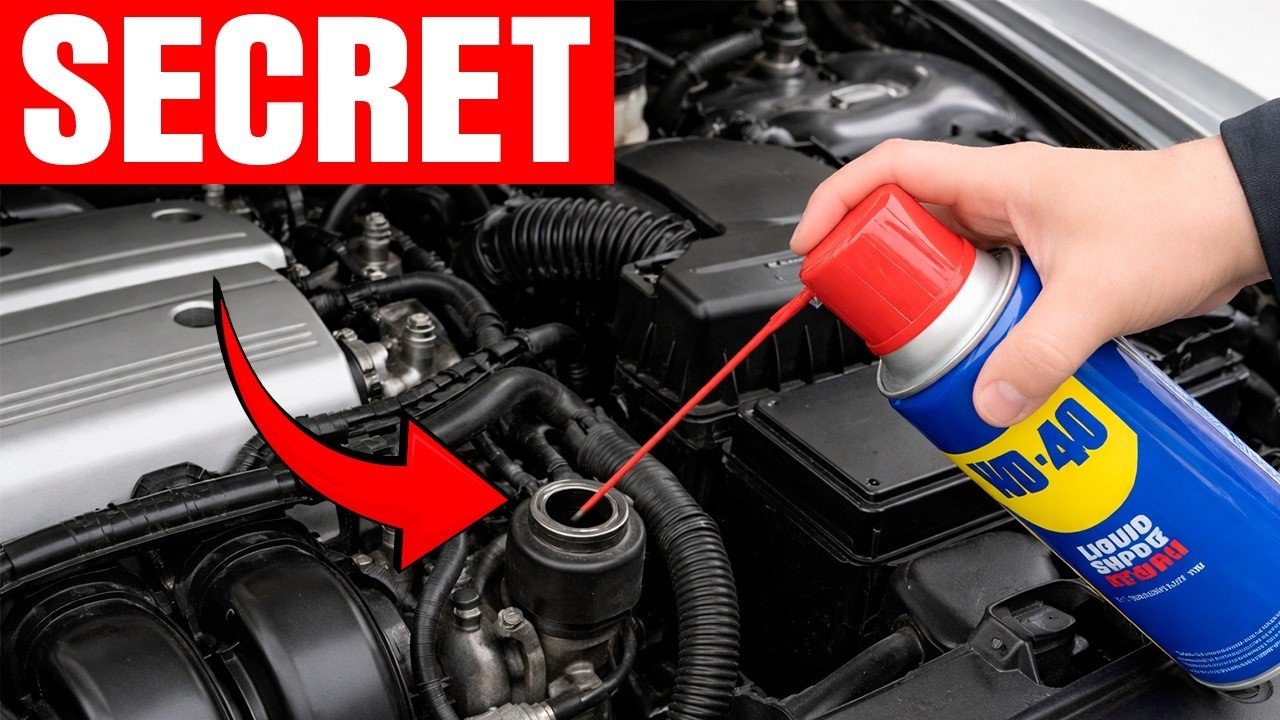
WD-40 keeps a diesel running by protecting the parts that corrosion and cold attack first. The presenter’s answer is simple: spray it on battery terminals to dissolve the green crust, work it into a stuck fuel cap, shoot it into frozen locks, mist it over the engine bay, and hit door hinges where the pin meets the sleeve. Diesel engines need more starting power than gas engines, so a corroded terminal robs cranking amps exactly when cold weather makes the engine hardest to turn over. A light coat left behind keeps moisture off the metal.
What to Have Ready and What to Watch Out For

- Keep a small can of WD-40 in your diesel emergency kit. A stuck fuel cap at a remote fuel stop can turn a routine stop into a long ordeal or a call for help.
- Have a cloth, a wire brush, and a microfiber cloth on hand. The terminals get wiped clean after the spray, and the engine bay and trim work both finish with a microfiber wipe.
- Spray bolts in high heat areas with WD-40 and let it penetrate overnight before you try to remove them. A bolt that snaps turns a simple repair into an extraction job with special tools.
- Don’t force a fuel cap that fights back. Spray around the edges and threads, wait a few minutes, then twist gently, so the seal stays undamaged.
- Treat a squeaking hinge as wear, not noise. Metal is grinding on metal, and ignoring it damages the hinge pins and sleeves.
- Spray WD-40 into the keyhole and around the door seals when a lock freezes. It displaces the moisture and melts the ice in seconds, so you aren’t locked out in the cold.
- Apply a light coat to locks and door seals before winter. That barrier keeps moisture from collecting, so the locks don’t freeze in the first place.
- The same can covers the engine bay. Mist it over plastic covers, hoses, and metal parts, then wipe off the excess. The film repels moisture and slows corrosion.
- Before winter, do the engine bay and the locks together. Road salt and moisture under the hood and frozen seals are the two problems the cold season brings.
Why Your Diesel Acts Up and What to Try First
| What you notice | What it usually means | What to try first |
|---|---|---|
| Green crusty buildup on battery terminals | Corrosion creating resistance that robs cranking amps; critical in cold weather when thickened oil and reduced battery capacity combine | Spray WD-40 on the terminals, let it bubble and dissolve the buildup, wipe clean, then leave a light protective coat |
| Fuel cap twists but won’t break free | Diesel vapors and road grime seizing the threads; diesel caps face chemical properties that speed up corrosion | Spray WD-40 around the cap edges and threads, wait a few minutes, then twist gently |
| Door lock frozen in winter | Ice has frozen the lock mechanism; diesel engines also take longer to warm up than gas engines | Spray WD-40 into the keyhole and around the door seals, wait a few seconds |
| Engine bay covered in oil, soot and grime | Diesel combustion builds grime faster than gasoline; it hides oil leaks and speeds corrosion of electrical parts | Wipe loose dirt with a damp cloth, mist WD-40 over plastic covers, hoses and metal, wipe off the excess |
| Squeak every time a door opens | Metal grinding on metal; heavier diesel doors carry more weight and wear hinges faster | Spray WD-40 at the hinge joints where the pin meets the sleeve, then move the door back and forth |
| Faded gray bumpers and side trim | An oxidized surface layer on the plastic | Spray WD-40 onto a microfiber cloth and wipe it across the trim |
The Checks in Order
Start by cleaning the battery posts. Apply WD-40 directly to the rust and let it fizz and break down. Use a rag or wire brush to wipe it off, then apply a thin layer again to shield the metal from dampness. The host claims that professional diesel technicians do this for every diesel vehicle in their workshop, since battery problems rank among the leading reasons for failure to start.
Loosen the fuel cap before you get stuck. Apply the spray around the rim and threads, give it a few minutes to soak in, then turn it carefully. The product dissolves the rust and greases the threads, allowing the cap to release without harming the gasket. Store the small can in your vehicle for this exact situation.
Defrost the locks and door seals. Spray directly into the keyhole and around the seals, then wait a few seconds. The formula displaces moisture and melts the ice. The presenter points out that WD-40 stands for water displacement, 40th formula — it was designed to push water away from surfaces, which is what a frozen lock needs.
Apply the same spray before winter arrives. A light coating on locks and door seals creates a barrier that stops moisture from collecting, so the locks don’t freeze in the first place. In cold climates, that’s the difference between starting your workday on time and losing hours.
Clean the engine bay. Wipe surfaces with a damp cloth to lift loose dirt, mist WD-40 lightly over plastic covers, hoses and metal parts, then wipe off the excess with a microfiber cloth. The protective film repels moisture and slows corrosion. It’s especially useful before winter, when road salt and moisture go after everything under the hood.
Stop the door hinges from squeaking. Apply the spray directly at the hinge points where the pin enters the sleeve, then open and close the door multiple times to distribute the lubricant. The host claims the noise vanishes right away. The product creates a slippery layer between the metal parts, which reduces the wear that would eventually require replacing the hinge.
- Treat bolts in hot areas the night before. Spray them with WD-40 and let it penetrate overnight. This is the step that decides whether a bolt unscrews smoothly or snaps off. Mechanics spray penetrating oil on bolts before removal because they’ve learned the lesson the hard way — a snapped bolt adds hours and needs specialized extraction tools.
What the Video Leaves Open

- The presenter never says how much WD-40 to use on any of these jobs. You get “lightly mist” for the engine bay and “a light coat” for the terminals, and nothing more specific than that.
- There’s no timeline for how long the protective film lasts, or how often you’d need to reapply it to battery terminals, locks, hinges or trim to keep the protection working.
- The claim that these tricks save hundreds in repairs is never broken down. No price, no repair bill and no comparison figure appears anywhere in the walkthrough.
- The video doesn’t say what to do if a trick fails. If the fuel cap still won’t move after the spray and the wait, or a bolt still won’t budge the next morning, there’s no next step given.
- Nothing is said about which diesels or which WD-40 product these tricks suit. The can is described only as the blue can, and the video never separates one version from another.
- The presenter doesn’t cover how to tell a problem these tricks fix from one they can’t. A battery that won’t hold a charge and a terminal that’s simply dirty look the same from the driver’s seat, and the video stays with the dirty one.
Two of these gaps matter more than the rest, because they decide whether a trick works at all.
The first is the difference between a terminal that’s dirty and a battery that’s failing. The video’s fix is for corrosion on the outside of the terminal, and it says the corrosion creates resistance that robs cranking amps.
Clean the terminal and the resistance goes with it. But a battery that has lost its ability to hold a charge will still crank weakly after you have wiped the terminals clean, and no amount of spray brings it back. If the terminals come up bright and the engine still turns over slowly, the problem was never the corrosion.
The second is the fuel cap. The video has you spray the edges and threads, wait a few minutes, then twist gently. It never says what comes after that wait. A cap that won’t move after the spray and the wait is a different problem from a cap that’s merely seized by vapors and grime, and the video offers no next step for it.
The same silence covers the bolt sprayed overnight. If it still won’t unscrew in the morning, the walkthrough ends there.
Frequently Asked Questions
Why does a diesel need this more than a gas car?
Since a diesel motor requires much greater power to start. The host clarifies that this is due to higher compression ratios, and that rust on the battery creates resistance that reduces the cranking amps available to the engine. This is most critical in cold conditions, when the oil thickens and the battery delivers less power. A gasoline engine with equally corroded posts might still start; a diesel is the one that leaves you stuck. That’s also why the host says professional diesel technicians clean posts on every diesel vehicle in their shop — they consider battery problems one of the leading causes of failure to start in diesel vehicles.
Can I use WD-40 on a fuel cap without wrecking the seal?
Absolutely, as long as you don’t rush it. The host’s approach is to apply the spray around the cap’s rim and threads, give it a few minutes to soak in, then turn it carefully. The product dissolves the rust and greases the threads, allowing the cap to come loose without harming the gasket. The caution isn’t to force it. A diesel cap locks up because diesel fumes and road dirt corrode the threads, and the host points out that diesel caps encounter different chemical properties than gasoline caps, which accelerates rust, particularly on work diesels in tough environments. A stuck cap at a distant stop can turn a simple fill-up into a lengthy hassle or a call for help, so the small can belongs in your emergency kit.
How fast does it work on a frozen lock?
Seconds. Spray WD-40 directly into the keyhole and around the door seals, then wait just a few seconds — the presenter says the formula displaces moisture and melts the ice instantly. The name is the clue: WD-40 stands for water displacement, 40th formula, and it was designed to push water away from surfaces. That’s exactly what a frozen lock mechanism needs. The better move is prevention. A light coating on locks and door seals before winter creates a barrier that stops moisture from collecting, so they don’t freeze at all. For diesel owners in cold climates, the presenter frames this as the difference between starting your workday on time and losing hours to a frozen lock.
What does WD-40 actually do for a dirty engine bay?
Two reasons. The first is looks: wipe the surfaces with a damp rag, spray WD-40 over plastic covers, hoses and metal components, then remove the excess with a microfiber cloth. The host calls the transformation instant, from worn and forgotten to showroom new. The second is safeguarding. The product leaves a coating that blocks moisture and stops rust, which is important because diesel engines operate hotter and generate more soot than gasoline engines. A grimy engine bay also conceals oil leaks and complicates routine maintenance when everything is covered in greasy soot. The host mentions detailers apply this before taking photos of diesel cars for sale, and that it’s especially helpful before winter, when road salt and dampness speed up rust under the hood.
Why do diesel door hinges squeak more?
Weight. The host says diesel cars and vans are constructed heavier, with stronger hinges that bear more weight. Those heavy-duty doors generate more friction, so they deteriorate faster. The squeak itself is metal rubbing against metal, and the host makes clear that it isn’t merely sound — it’s deterioration that leads to costly hinge replacement if ignored. The solution takes about half a minute: spray at the hinge points where the pin enters the sleeve, then open and close the door multiple times to distribute the lubricant through the mechanism. The product creates a slippery layer between the metal parts, which is what halts the wear. For work trucks used daily, the host says this easy task prolongs hinge lifespan.
What’s the trick for faded black trim?
Apply WD-40 to a microfiber cloth and rub it over any dull black plastic trim. The host calls the result immediate — chalky gray becomes deep black and shiny, as if it just left the factory. It works because the product soaks into the oxidized outer layer and restores the original color. The host says this is the same method some dealerships use to prepare used diesels for sale photos, since it makes a car appear thousands of dollars more valuable. It’s the final trick in the walkthrough and the one the host says takes under 5 minutes. The same overnight practice applies to bolts in hot areas: spray them and let the product soak in before you attempt to remove them.
The first thing to do is the cheapest and the most likely to strand you: open the hood and look at your battery terminals. If there’s green crust on them, spray, wipe, and leave a light coat behind. That single habit protects the cranking amps your diesel needs on the coldest morning of the year. Everything else on the list can wait for a dry afternoon — the fuel cap, the locks before winter, the engine bay, the hinges, the trim. Pick the one that matches the season you’re heading into, and do it before the problem shows up.
