

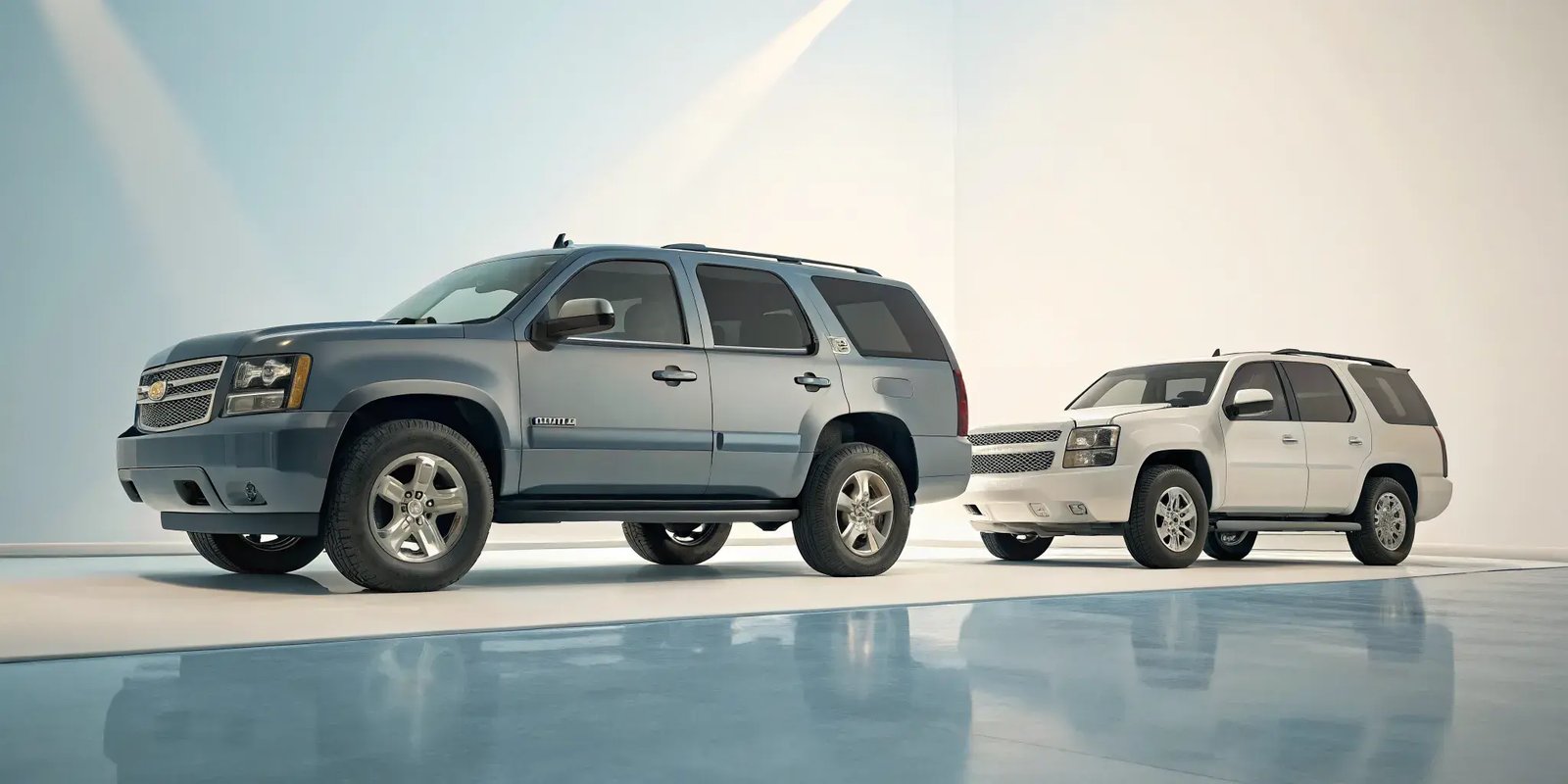
When shopping secondhand for a Toyota Tacoma, the model years to steer clear of are 2005 through 2010, 2016 through 2017, and 2024. The 2005 to 2010 examples rank as the poorest in the nameplate’s past due to frame corrosion so extreme that Toyota was hit with a $3.4 billion class-action suit involving 1.5 million vehicles. The 2016 and 2017 versions introduced transmission shudder along with a timing cover oil leak. The 2024 model is a debut-year redesign whose reliability rating is only 55 out of 100. The most secure used choices are 2013 to 2015 and 2018 to 2023.
The years to skip and the years to buy
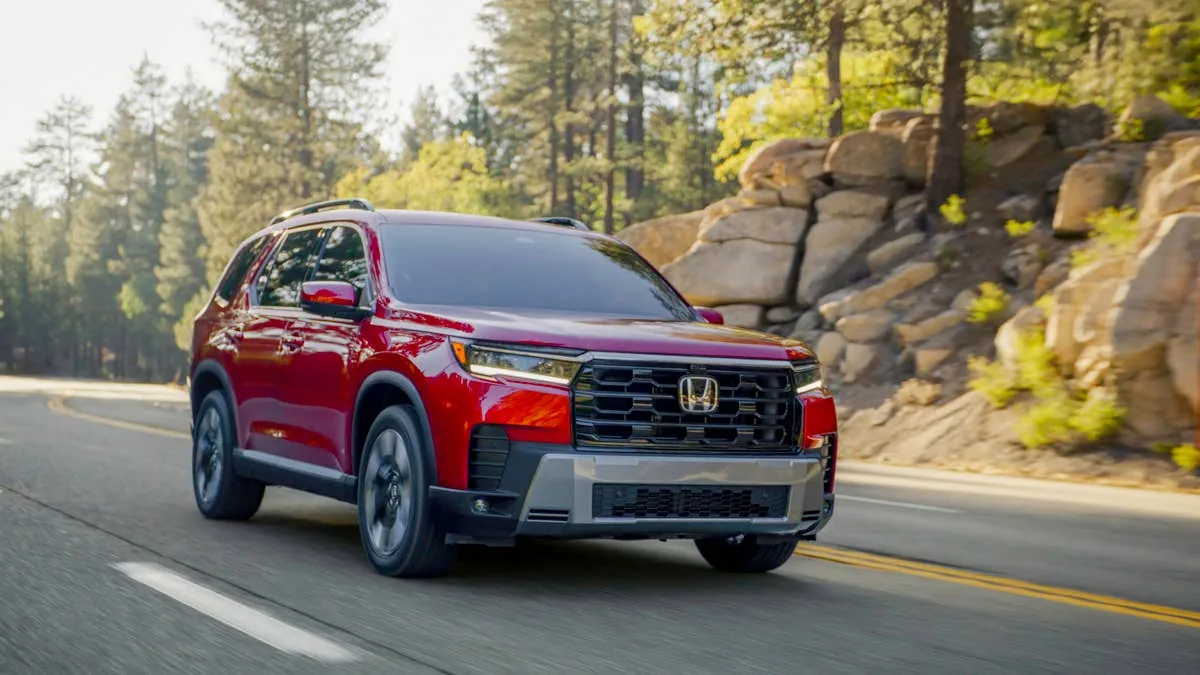
If you can verify the frame was replaced under warranty and the truck came from a dry climate state, a bad year can still work — but if you can’t verify either one, walk away.
That’s the rule the presenter applies across every Tacoma generation. Frame rust is the single biggest issue, and it doesn’t care which year is stamped on the door. A truck can look fine on the outside and be rotted from the inside.
The walkthrough’s pick for used buyers is 2013 to 2015 or 2018 to 2023. Both groups earned reliability scores of 67 to 70 out of 100, and both had the major problems of their generation already fixed. The 2013 to 2015 trucks use a proven 4-liter V6, and the presenter says they regularly pass 250,000 miles with basic maintenance.
Among the models to steer clear of, the 2005 to 2010 trucks are in a category of their own. Toyota resolved the frame matter by providing inspections, replacements, and buybacks at 150% of Kelley Blue Book value. Yet the presenter points out that numerous owners never received a recall notice, and in certain states the warranty coverage lapsed by 2011. Consequently, a buyer today can’t depend on Toyota to make it right.
The 2016 and 2017 trucks are the most complained-about third-generation years, and the presenter says to skip them entirely. The 2024 is a first-year redesign, and the presenter’s advice is to wait for 2025 or 2026 instead. The 2025 scores 70 out of 100, well above the 2024’s 55, but the presenter is clear that its long-term reliability is still unproven.
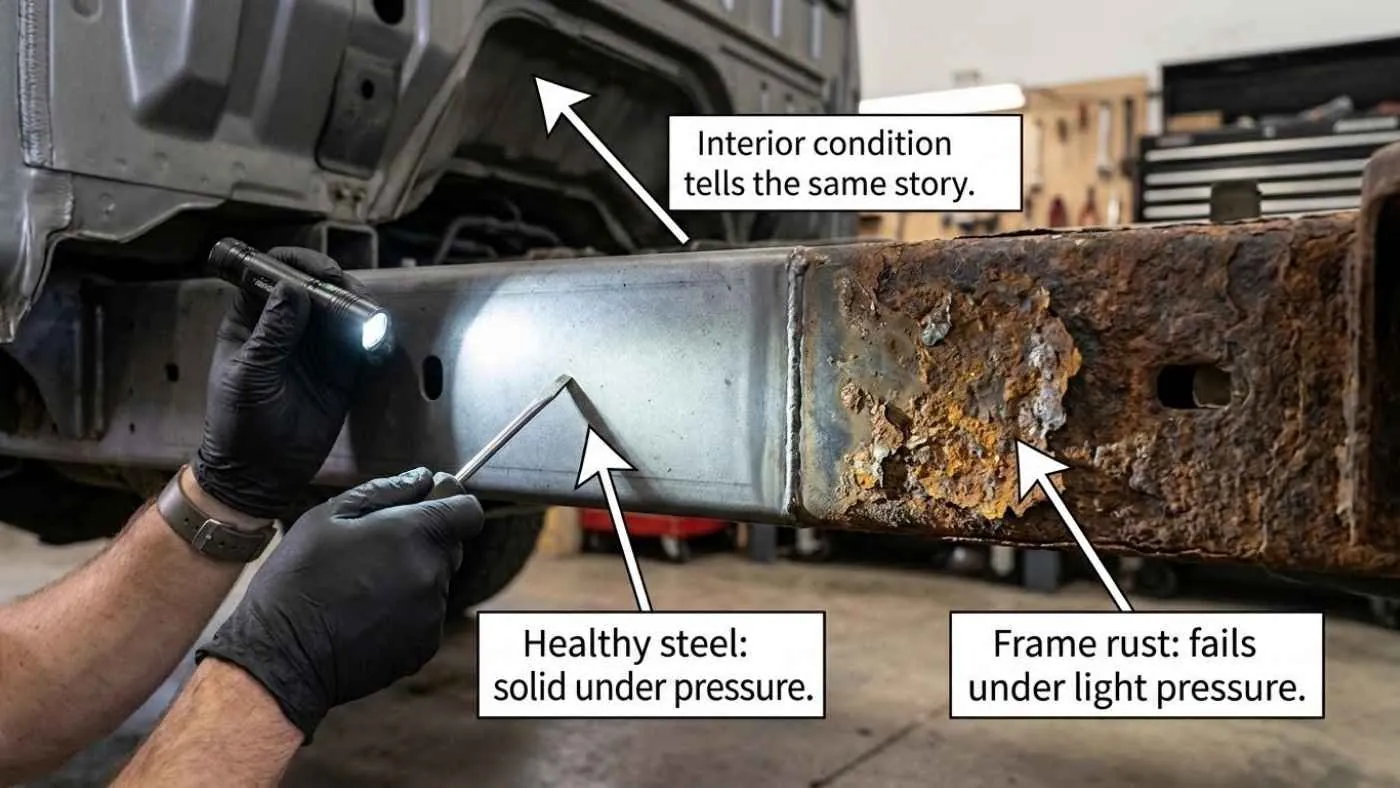
Inspection is where most buyers go wrong. On a 2010 or older truck from a cold-weather state, look for holes, flaking rust, and soft spots. Run your eyes down the entire length of both frame rails, especially around the mounting points.
On a 2016 or 2017, the test drive is the inspection. Pay attention to shift quality, and to any hesitation or shudder. On any 2016 to 2023 truck with the 3.5-liter V6, check for oil seepage around the front of the engine. That timing cover leak is expensive to fix.
Two documents settle more than any walkaround. Check the VIN for open recalls, and read the CARFAX for previous frame inspections or warranty work. Then join a Tacoma forum and ask about the specific year you’re considering.
Corrosion appears much less often on trucks originating from Arizona, Texas, California, and other southern states where road salt isn’t applied. Tacomas lose only 33% of their value after five years, so the extra cost is genuine. A rusted 2007 or a 2016 with transmission shudder isn’t worth any amount.
What the good Tacoma years get right
- The 2013 to 2015 trucks had every major second-generation issue resolved, including frame rust, paint peeling, and transmission and clutch problems.
- Those model years use a naturally aspirated 4-liter V6 with no turbocharger to break, no direct injection carbon accumulation, and very little emissions complexity.
- Reliability scores for 2013 to 2015 land between 67 and 70 out of 100.
- The 2018 to 2023 trucks fixed the transmission shudder and the timing cover leak that hurt 2016 and 2017.
- Those third-generation model years include contemporary safety equipment such as Toyota Safety Sense, adaptive cruise control, and enhanced off-road ability.
- The 2025 model scores 70 out of 100 and offers an i-FORCE MAX hybrid with 326 horsepower and 465 pound-feet of torque.
Where the problem years go wrong
- The 2005 to 2010 frames were fully boxed with poor drainage, so moisture got trapped and rusted them from the inside out.
- In cold-weather states, those frames developed holes larger than 10 mm, and in severe cases they buckled in half while trucks sat on lifts for routine service.
- Those same model years also deal with paint flaking on hoods and roofs, lethargic automatic transmissions, early clutch wear on manual gearboxes, and leaf springs that split and snap.
- The 2016 and 2017 six-speed automatic hunts for gears, delays shifts, and surges, and a torque converter replacement runs $1,500 to $2,500 out of pocket.
- The 3.5-liter V6 in those years has a timing cover oil leak from faulty factory sealant, and the fix requires pulling the engine at a cost of $3,000 to $6,000.
- A failed third brake light seal lets water soak the headliner and carpet, which causes mold and mildew.
Who should buy one of these trucks
The 2013 to 2015 trucks suit a buyer who wants a simple, proven used truck and doesn’t need modern tech. The presenter calls them the best used truck value, and the 4-liter V6 is described as one of the most reliable engines Toyota ever built. It’s naturally aspirated, so there’s no turbo to fail and no direct injection carbon build-up. These trucks regularly exceed 250,000 miles with basic maintenance.
The 2018 to 2023 trucks fit a buyer who wants a modern Tacoma with technology and comfort. That group gets the safety features and the off-road capability, plus minimal owner complaints. Toyota fixed the transmission shudder and the timing cover leak here, the two problems that define the years just before them.
The 2025 suits someone buying new who wants the safer bet over the 2024. The presenter points to better transmission calibration, better turbo tuning, and the hybrid option, but repeats that long-term reliability is still unproven.
Buyers in cold-weather states should be the most careful, because road salt is what drives the frame damage. The presenter says to buy from dry climate states when possible, since rust is much less common on trucks from Arizona, Texas, California, and southern states that don’t use road salt.
If you’re shopping a 2010 or older truck from a cold state, inspect the frame yourself. Look for holes, flaking rust and soft spots along the entire length of both frame rails, especially around the mounting points. A frame can look decent from the outside while being rotted internally.
If you’re shopping a 2016 or 2017, test drive it thoroughly and pay attention to shift quality, hesitation and shudder. Check for oil seepage around the front of the engine on the 3.5-liter V6, because that repair is expensive.
If the vehicle is a 2005 to 2010, only move forward once you can confirm the frame was swapped under warranty. Look up the VIN for outstanding recalls and review the CARFAX for earlier frame inspections or warranty repairs. A rusted 2007 or a 2016 with transmission shudder isn’t worth any amount, no matter what the asking price is.
What the video leaves open
How much a clean truck should cost. The presenter talks about the Toyota tax and how Tacomas depreciate only 33% after five years, but never puts a price on any specific year or trim. What he does give you is the shape of the premium. A truck that holds two thirds of its value after five years is priced accordingly on the used lot, and that’s exactly why the condition checks matter more here than on a truck that has already shed most of its value.
How long an inspection takes or what it costs. A frame inspection is the central piece of advice for older trucks, yet the video doesn’t say who does it, how long it takes, or what a shop charges. What it does tell you is what the inspector is looking for. Holes, flaking rust, and soft spots, along the entire length of both frame rails, especially around the mounting points. A frame can look decent from the outside while being completely rotted internally, so a cosmetic glance from the seller’s driveway proves nothing.
What a failed inspection leaves you with. The presenter advises walking away from a corroded frame, but doesn’t address what a buyer should do if they’ve already bought a truck that proves to have concealed rust. The video’s own background is the nearest thing to a solution. Toyota resolved the class action by providing frame inspections, replacements, and buybacks at 150% of Kelley Blue Book value, and many owners never got recall notices. That makes the VIN the first item to verify for outstanding recalls, before presuming the opportunity has passed.
Whether the 2025 hybrid carries extra risk. The i-FORCE MAX is described as the most powerful Tacoma ever, but the presenter doesn’t distinguish its long-term prospects from the remainder of the 2025 lineup. He attaches a single caveat to the entire year: the 2025 is a safer choice than 2024, though long-term reliability remains unproven. The hybrid receives no distinct judgment, so consider it covered by that same statement rather than as a demonstrated quantity.
How to confirm a frame replacement actually happened. The presenter says to verify the frame was replaced under warranty, but doesn’t say which documents or records prove it beyond a CARFAX report. He points to two sources: the CARFAX for previous frame inspections or warranty work, and the forums, where you can ask about specific year concerns. He also notes that warranty coverage expired in some states by 2011, so a replacement claimed on a truck from one of those states deserves a closer look.
Frequently Asked Questions
Is the 2016 Tacoma a bad year?
Yes, according to the presenter. The 2016 and 2017 trucks are the first two years of the third-generation redesign, and the walkthrough says to skip them entirely. The six-speed automatic hunts for gears, delays shifts, and surges, and Toyota’s software updates didn’t fix the underlying torque converter problem. A replacement runs $1,500 to $2,500 out of pocket. The 3.5-liter V6 also has a timing cover oil leak from faulty factory sealant, and that repair costs $3,000 to $6,000 because the engine has to come out. On top of that, a failed third brake light seal lets water into the headliner and carpet. Car Complaints listed 163 owner complaints for 2016 and 93 for 2017, making them the most complained-about third-generation years.
Which Tacoma years last the longest?
The 2013 to 2015 trucks are the presenter’s answer for long life. By 2013, Toyota had resolved all the major second-generation issues, and frame rust was fixed with a new supplier in 2015. Those trucks use a naturally aspirated 4-liter V6 with no turbo, no direct injection carbon build-up, and minimal emissions complexity. The presenter says they regularly exceed 250,000 miles with basic maintenance, and their reliability scores sit between 67 and 70 out of 100. The 2018 to 2023 group matches those scores and adds modern safety tech, so it’s the other long-life option if you want a newer truck.
Should I buy a 2024 Tacoma or wait?
The presenter’s advice is to wait. The 2024 is the first year of the fourth generation, with an all-new platform and turbocharged four-cylinder engines, and it scores only 55 out of 100 for reliability. There are 126 owner complaints centered on powertrain issues, brakes, and electrical systems, and some owners report transmission refinement problems similar to 2016 and 2017. The 2025 scores 70 out of 100, helped by refinements to transmission calibration and turbo tuning. The presenter suggests waiting for 2025 or 2026 so Toyota can iron out the early production issues, while noting that even the 2025’s long-term reliability is still unproven.
How do I check a Tacoma frame before buying?
The presenter’s method is a careful visual inspection. Look for holes, flaking rust, and soft spots, and check the entire length of both frame rails, especially around the mounting points. The catch is that a frame can look decent from the outside while being completely rotted internally, which is why the presenter says to get a thorough frame inspection on any 2005 to 2010 truck from the rust belt. Beyond the frame itself, the presenter also suggests checking the VIN for open recalls and reading the CARFAX for previous frame inspections or warranty work. Joining Tacoma forums and asking about specific year concerns is another step the presenter recommends.
Are Tacomas from dry states really better?
Yes, according to the presenter. Corrosion is considerably less frequent on trucks from Arizona, Texas, California, and southern states where road salt isn’t used. The frame issue on 2005 to 2010 trucks was caused by road salt in cold-weather states, where moisture held inside the boxed frame ate it away from the inside out. That’s why the presenter’s guideline for those years involves purchasing from a dry climate state, together with evidence that the frame was replaced under warranty. For the 2016 and 2017 trucks, climate counts for less, because their issues relate to transmission and engine rather than rust.
Is the Toyota tax worth paying on a Tacoma?
Not in every case, according to the presenter. Tacomas lose only 33% of their value after five years, which keeps used prices elevated, and the presenter refers to that premium as the Toyota tax. But the presenter is direct that a rusted 2007 or a 2016 with transmission shudder isn’t worth any amount. The premium only makes sense on the years that earned the reputation, which the presenter names as 2013 to 2015 and 2018 to 2023 for used buyers. Paying more for a problem year means paying twice: once for the truck and again for the repairs.
The first thing to do is decide which group you’re shopping in. If it’s a used truck, aim at 2013 to 2015 or 2018 to 2023, and treat any 2005 to 2010 or 2016 to 2017 listing as a project until proven otherwise. If it’s new, the 2025 is the safer bet over the 2024, with the honest caveat that its long-term record isn’t written yet. Then do the checks the presenter laid out before any money moves: inspect both frame rails for holes, flaking rust, and soft spots, test drive for shift quality and shudder, look for oil seepage at the front of the engine, check the VIN for open recalls, and read the CARFAX for past frame or warranty work. A Tacoma with a clean frame and a clean history is the truck people brag about. One without either is the one they warn you about.
