

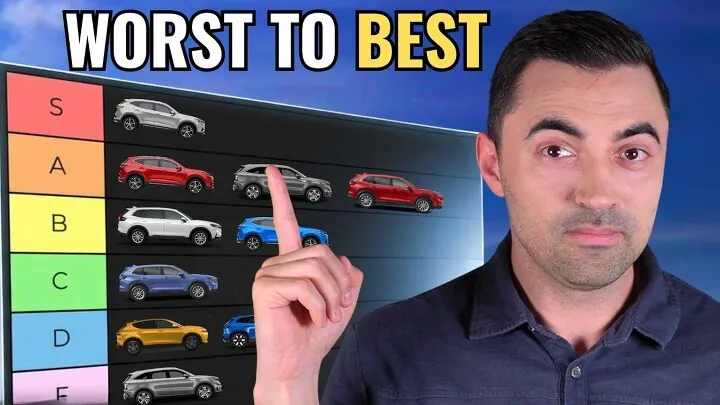
The best SUVs to buy for reliability in 2025 are the Mazda CX-5, Toyota RAV4, Honda CR-V, and Lexus RX. These vehicles consistently earn top marks from experts for their long-term dependability and low repair costs. Conversely, the worst SUVs to avoid due to mechanical issues and frequent recalls include the Jeep Wrangler (2012–present), Land Rover Range Rover (2013–2022), Ford Explorer (2020), and Nissan Pathfinder (2013–2020). The presenter notes that these models often suffer from transmission failures, electronic gremlins, and expensive, recurring maintenance needs. While some owners may love the style of a status symbol like a Range Rover, the presenter warns that these vehicles often spend more time at the repair shop than on the road. Choosing a reliable model can save you thousands of dollars in out-of-warranty repairs and prevent the frustration of being stranded.
Comparing Reliable and Unreliable SUV Options
| SUV Model | Years | Known Issues |
|---|---|---|
| Nissan Pathfinder | 2013–2020 | CVT transmission failure, overheating |
| Ford Explorer | 2020 | Transmission recalls, rear axle bolts |
| Land Rover Range Rover | 2013–2022 | Air suspension failure, electrical glitches |
| Jeep Wrangler | 2012–Present | Death wobble, suspension and engine issues |
| Lexus RX | 2013–2023 | None (High reliability) |
| Honda CR-V | 2012–2022 | None (Minimal minor repairs) |
| Toyota RAV4 | 2013–2023 | None (Proven, simple powertrains) |
| Mazda CX-5 | 2012–2023 | None (Traditional automatic transmission) |
Key Differences in SUV Reliability
Which transmission types are most reliable?
The presenter highlights that the type of transmission significantly impacts an SUV’s longevity. Models like the Mazda CX-5 are praised for using a traditional six-speed automatic transmission rather than a continuously variable transmission (CVT).
In contrast, the Nissan Pathfinder faced major mechanical issues specifically tied to its CVT, leading to class-action lawsuits and expensive replacement costs. A traditional setup, according to the walkthrough, is often more durable and avoids the shuttering or overheating problems found in more complex, newer transmission designs.
Why do some luxury SUVs cost more to own?
European luxury SUVs, particularly the Land Rover Range Rover, are cited as having “abysmal reliability” despite their high price tags. The presenter explains that these vehicles often feature complex air suspensions and sensitive electronics that frequently fail.
When these components break, the repair bills are “jaw-dropping.” For example, a single suspension repair can cost $8,000, while an electronic control module might cost $5,000. The presenter suggests that if you must own such a vehicle, it’s best to lease it while it’s still under warranty to avoid these massive personal expenses.
How do Japanese SUVs maintain high dependability?
The most reliable SUVs, such as the Lexus RX and Toyota RAV4, benefit from a conservative engineering approach. The presenter notes that these manufacturers rely on “proven powertrains” and avoid adding overly complex gadgets that are prone to breaking.
By focusing on the basics and using high-quality parts, these vehicles often reach 200,000 miles with only routine maintenance. The Lexus RX is highlighted as a prime example, as it shares core components with the ultra-reliable Toyota Highlander but is built to even higher luxury standards.
How to Choose the Right SUV
If you prioritize long-term peace of mind and low repair costs, then you should select a vehicle with a proven track record like the Mazda CX-5 or Toyota RAV4.
The presenter advises that for families needing space and efficiency, the Honda CR-V is an excellent “sure bet” that avoids the drama of frequent shop visits. If you’re looking for luxury, the Lexus RX provides a quiet and plush experience without the high repair risks of European competitors.
For those who enjoy an engaging driving experience, the Mazda CX-5 is the top recommendation because it pairs high reliability with sporty handling. If you’re considering a Jeep Wrangler, the presenter warns that it’s a “mechanical minefield” and should only be chosen if you have a deep personal passion for the brand’s lifestyle, despite its poor reliability scores.
What the Video Leaves Open
The video omits a pre-purchase checklist for test drives. When evaluating these models, prioritize listening for the specific “grinding or clunking” noises associated with the Ford Explorer’s transmission or the “shuttering” typical of a failing Nissan CVT. A quick highway test is essential to trigger the Jeep Wrangler’s “death wobble,” which feels like a violent shake after hitting a bump.
The analysis also ignores electric-only SUVs, leaving a gap for buyers transitioning away from internal combustion. While gas and hybrid reliability is tied to powertrain longevity, electric models shift the risk toward battery health and software integration.
Furthermore, the video lacks guidance on maintenance. To reach the 200,000-mile mark cited for the Lexus RX or Honda CRV, follow the manufacturer’s severe service interval if you live in extreme climates. For repairs, choosing an independent specialist over a dealership often saves money on labor, provided they have experience with the specific brand’s common electronic gremlins.
Frequently Asked Questions
Is the Jeep Wrangler reliable for off-road use?
The presenter states that the Jeep Wrangler is a “rocky” choice for reliability, even for those who take it off-road. While owners often report high satisfaction with the brand, the vehicle suffers from issues like the “death wobble” and frequent recalls. Since off-roading causes additional wear and tear, these existing mechanical weaknesses can lead to even more frequent repairs. The presenter emphasizes that the Wrangler performs poorly in predicted reliability scores, meaning that while it’s an iconic vehicle, it isn’t a safe bet for someone who needs a vehicle that’s guaranteed to be trouble-free.
Why is the 2020 Ford Explorer considered a bad buy?
The 2020 Ford Explorer is labeled a “reliability disaster” because of its poor performance immediately after its redesign. It suffered from at least five separate recalls related to its transmission, including issues with fluid leaks and cracked drive shafts. Furthermore, a major recall involved over 238,000 vehicles due to a faulty rear axle bolt that could cause a loss of power or allow the car to roll away. Beyond these safety-critical recalls, owners report that the vehicle suffers from electronic gremlins and a jerky transmission, making it a difficult car to recommend to families.
Are hybrid SUVs more reliable than gas models?
The presenter suggests that hybrid technology can actually improve reliability for certain brands. Specifically, for the Toyota RAV4, the presenter notes that hybrid versions are often even more reliable in surveys because Toyota has perfected its hybrid system over many years. This contradicts the idea that more complex technology always leads to more repairs. By opting for a proven hybrid system, owners can benefit from excellent fuel efficiency without sacrificing the “bulletproof” nature that Toyota is known for.
How much should I budget for repairs on a used SUV?
SUV maintenance budgets vary significantly by brand, with the Honda CR-V averaging $400 in annual repairs and the Mazda CX-5 staying under $450. In contrast, luxury models like the Range Rover can result in single repairs costing thousands of dollars. While the most reliable models require minimal unscheduled maintenance, the least reliable vehicles often demand high, recurring costs that can quickly strain a budget.
The best way to start your search is to prioritise vehicles with a long history of consistent engineering, such as the Mazda CX-5 or the Toyota RAV4. If you have your heart set on a specific model, look for those that avoid the complex transmission or suspension issues mentioned by the presenter. You should focus on vehicles with high owner satisfaction and low repair frequencies to keep your costs down. Before you make any final purchase, ensure you check the vehicle’s specific recall history to avoid known trouble spots. By sticking to these reliable choices, you can find a dependable SUV that keeps you on the road and away from the mechanic.
