

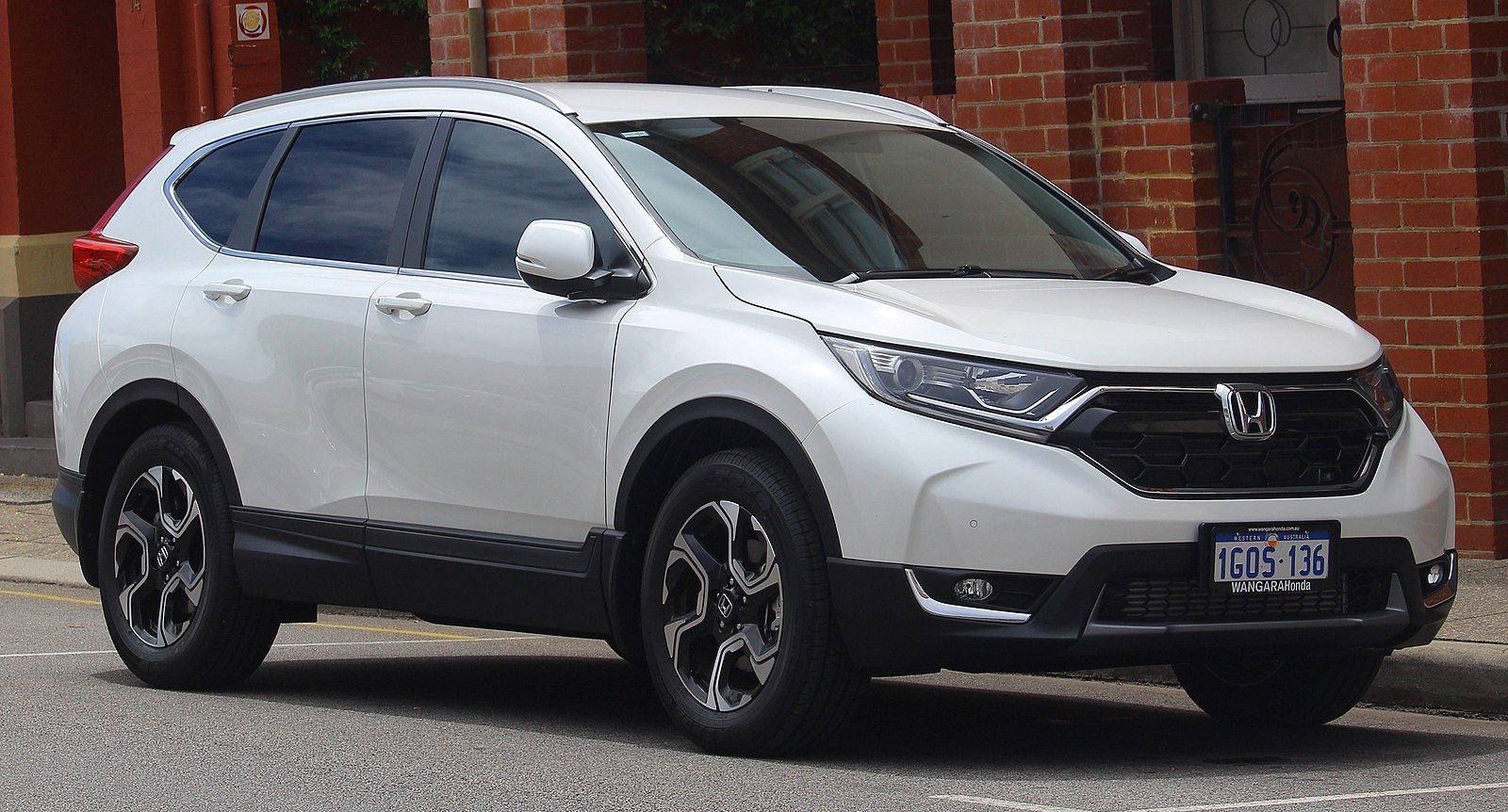
The years to avoid are 2017 and 2018, followed by 2015, then the whole 2007 to 2009 run and 2002 to 2003. The 2017 and 2018 CR-Vs came with a 1.5 L turbocharged engine that let gasoline mix into the engine oil — the presenter says 87 of 111 engine-related complaints filed with NHTSA for those two years were about exactly that, or 78%. The years to buy are 2019 to 2021, 2016, 2013, and 2006. Between them sit the caution years — 2011, 2010, and 2014 — which aren’t disasters, but need a careful look before you hand over money.
CR-V years side by side

| Point | 2017–2018 | 2015 | 2007–2009 | 2019–2021 | 2016 |
|---|---|---|---|---|---|
| Main problem | Gasoline mixing into engine oil | Severe vibration | Airbag defects, electrical fires, frame corrosion | — | — |
| Engine | 1.5 L turbocharged | Earth Dreams engine | — | 1.5 L turbocharged, 190 hp | 2.4 L naturally aspirated, 185 hp |
| Worst repair cost named | $8,000 for a complete engine | — | Over $2,500 for the AC system | — | — |
| Owner complaints | 87 of 111 engine complaints to NHTSA were oil dilution | More overall complaints than any other CR-V year | — | NHTSA complaints down over 50% from earlier fifth-generation models | Three recalls, all minor |
| Fuel economy | — | — | — | Up to 34 mpg highway | — |
Where these CR-V years differ
Why are 2017 and 2018 the worst years?
The presenter places the 2017 and 2018 versions at the absolute top of the list of models to stay away from. Each of them featured a 1.5-liter turbocharged powerplant with a single enormous defect: fuel leaking directly into the motor oil. The presenter describes this as Honda’s worst engineering blunder in recent history.
The way it happens is simple enough. In cold weather, or on short trips, unburned fuel sticks to the cylinder walls. From there it gets scraped down into the crankcase, where it mixes with your oil. The oil loses the properties that let it lubricate the engine, and the level can actually rise above the full mark on the dipstick. The presenter says some owners reported oil changes every 500 miles just to keep their engines from seizing.
The repair numbers are the part that hurts. A complete fuel injector replacement runs $2,500. A head gasket failure runs $4,000. A complete engine replacement can hit $8,000. The presenter also points to one owner in Minnesota whose dashboard lit up while he was driving, forcing him to pull over on the spot — Honda eventually bought that vehicle back under lemon law. Consumer Reports confirmed the issue affects vehicles nationwide, not only in cold climates.
What’s wrong with the 2015 CR-V?
The 2015 CR-V earned what the presenter calls a dubious honor: it was named turd of the week by Car Talk. That year Honda redesigned the CR-V, brought in the Earth Dreams engine, and gave the vehicle its first CVT transmission. The goal was better fuel economy. What owners got instead was vibration bad enough that people reported headaches and nausea.
The 2015 model has more overall complaints than any other CR-V year. The vibration shows up most when you’re stopped at a traffic light with the vehicle in drive. It travels through the steering wheel, the seats, and the headrests. One owner in Massachusetts described it as holding onto a vibrating chair.
Honda did respond. The company issued a 19-page technical service bulletin laying out multiple fixes, including software updates and new engine mounts. But the presenter says many owners report those fixes only cut the problem by about 50%. That’s the difference between the 2015 and the good years: the fix didn’t finish the job.
Why is the third generation so risky?
The third generation, which covers 2007 to 2009, is described as Honda’s least reliable generation ever. These vehicles suffer critical failures — persistent airbag defects, electrical fires, and frame corrosion that can lead to rear suspension collapse.
Among the whole set, the 2007 version ranks as the poorest. Door lock actuators break down often, which may lock people inside or result in doors that won’t open. The presenter claims to have gone through this firsthand, with rear doors that kept re-locking in a matter of seconds — a genuine danger when kids are aboard.
Electrical issues range from window switch fires that melt the plastic casing. When AC compressors give out, they contaminate the entire system and require a complete replacement costing over $2,500. Overheating caused by failing radiator fans happens often, and it can lead to heater core leaks that dump hot coolant into the cabin.
The second-generation 2002 to 2003 versions inherit numerous issues from the prior generation while introducing additional ones. The black death AC compressor breakdown appears most frequently in those years — the compressor dies catastrophically and pushes metal debris throughout the whole system, with fixes usually costing $1,600 or more.
Airbag system failures are widely documented, with certain units not deploying in collisions and others going off without warning. Window switch fires persist, headlight flaws pose hazards for nighttime driving, and overheating grows more common because of failing thermostats and radiator fan assemblies. Taken together, those problems make the 2002 to 2003 models costly to maintain on the road.
Why are 2016 and 2013 the best of the fourth generation?
The 2016 CR-V represents the high point of the fourth generation. Honda had honed the 2.4 L naturally aspirated engine to its maximum reliability, delivering 185 horsepower without any of the turbocharger complications that created issues afterward. JD Power awarded it a reliability rating of 83 out of 100, which the presenter describes as excellent.
Consumer Reports scored it 69 out of 100 — a figure that seems average but is outstanding for its segment. On cars.com, 90% of owners awarded it five-star ratings. The 2016 model carries just three recalls, all fairly minor: a potentially defective fuel pump, engine stalling, and airbag inflator ruptures that touched several automakers. Weighed against the lengthy problem list of the 2017 model, the presenter says the 2016 turns into a clear pick.
The 2013 CR-V is the other fourth-generation pick. It integrated new technology and safety features while keeping excellent reliability, and the presenter calls it the sweet spot of the generation — the early bugs were worked out, but it came before the problematic 2015 redesign. Owners consistently praise the smooth ride, the comfortable interior, and trouble-free operation. The 2.4 L engine and five-speed automatic transmission combination proved extremely durable.
What makes 2019 to 2021 the safest buy?
The 2019, 2020, and 2021 model years are the absolute peak of CR-V reliability in the presenter’s view. Honda had worked out the oil dilution problems that plagued 2017 and 2018, and these vehicles carry every lesson learned from that mess.
The 2019 CR-V deserves special attention. Based on NHTSA figures, the number of complaints fell by over 50% relative to earlier fifth-generation versions. You receive the improved 1.5 L turbocharged engine with the issues resolved, delivering 190 horsepower and achieving as much as 34 miles per gallon on the highway.
The 2021 model is broadly regarded as one of the finest CR-V years ever produced. carcomplaints.com reports very few issues overall, and Consumer Reports awards it strong reliability scores. The Honda Sensing safety package is included as standard, featuring forward collision warning, lane departure warning, and automatic emergency braking. If you’re after the most recent of the solid years, this is the one the presenter highlights.
Which CR-V year should you buy?
If you want the safest bet with the fewest known problems, then buy a 2019 to 2021 CR-V; if your budget is tighter, buy a 2016 or a 2006.
For buyers who want the newest vehicle and the standard safety features, the presenter’s pick is the 2019 to 2021 group — the 2021 especially, since it’s widely considered one of the best CR-V years ever produced.
For buyers who want the peak of the fourth generation, the answer is the 2016. It has the refined 2.4 L engine, strong scores from JD Power and Consumer Reports, and only three minor recalls.
For buyers seeking maximum value, the presenter names the 2006 CR-V as one of the best reliability bargains available. It resolved most of the AC compressor problems from earlier second-generation models and kept the proven 2.4 L four-cylinder engine. Even at nearly 20 years old, well-maintained examples regularly pass 200,000 miles.
The one case where the presenter says to walk away is 2017 and 2018. The oil dilution problem, the buyback, and repair bills up to $8,000 make those two years the ones to skip, no matter how good the price looks.
What the video leaves open
- The presenter never says how long any of this takes to check. There’s no guidance on how many hours a pre-purchase inspection of a used CR-V should take, or how long a repair visit runs.
- No prices are given for the good years. The video names repair costs for the bad ones — $2,500, $4,000, $8,000, $1,600, over $2,500 — but it never says what a 2016, a 2019, or a 2006 should cost you today.
- There’s no checklist of what to bring or check first. The presenter says to inspect a caution year carefully, but doesn’t list the documents, the questions for the seller, or the specific parts to look at.
- The video doesn’t say who shouldn’t buy these cars. It gives no guidance for buyers outside the US, where the recall and complaint history it cites may not apply.
- Nothing is said about what to do if a repair goes wrong, or what a buyer’s options are after a bad purchase beyond the lemon law buyback it mentions in passing.
Frequently Asked Questions
Is the 2015 CR-V a bad year?
Indeed, the presenter includes the 2015 CR-V on the list of years to avoid. Car Talk labeled it turd of the week, and it has accumulated more total complaints than any other CR-V year. The issue involves vibration intense enough that owners described headaches and nausea, felt most strongly when idling at a stoplight with the transmission in drive, and transmitted through the steering wheel, seats, and headrests. Honda released a 19-page technical service bulletin with software updates and revised engine mounts, yet the presenter notes that many owners say the remedies only cut the problem by roughly half. That’s the reason the 2015 belongs with the bad years instead of the caution years.
What is the oil dilution problem in the 2017 and 2018 CR-V?
When temperatures are low or trips are brief, unburned fuel clings to the cylinder walls and is scraped down into the crankcase, where it blends with the engine oil. The oil subsequently loses its ability to lubricate, and the level may climb past the full mark on the dipstick. The presenter notes that 87 of 111 engine-related complaints submitted to NHTSA for those years concerned this issue, amounting to 78%. Owners described changing the oil every 500 miles simply to prevent engines from seizing, and one owner’s car was repurchased by Honda under lemon law after his dashboard illuminated while he was driving.
How much do the worst CR-V repairs cost?
The presenter gives several figures. A complete fuel injector replacement on the affected 2017 to 2018 models costs $2,500. A head gasket failure runs $4,000. A complete engine replacement can hit $8,000. On the 2002 to 2003 models, the black death AC compressor failure typically runs $1,600 or more. On the 2007 to 2009 models, an AC compressor failure contaminates the entire system and needs a full replacement at more than $2,500. Those numbers are why the presenter treats these years as expensive to own rather than just annoying.
Which CR-V year is the most reliable?
The presenter points to 2019 to 2021 as the absolute peak, with the 2021 widely considered one of the best CR-V years ever produced. NHTSA complaint numbers for the 2019 dropped by more than 50% compared to earlier fifth-generation models. carcomplaints.com lists very few overall issues for the 2021, and Consumer Reports gives it high reliability ratings. The 2016 is the other top pick — JD Power scored it 83 out of 100 and it has only three minor recalls. For maximum value, the 2006 is named as one of the best reliability bargains available.
Is a high-mileage 2006 CR-V still worth buying?
The presenter answers yes, for shoppers chasing the greatest value. The 2006 fixed the majority of the AC compressor troubles that had troubled earlier second-generation models and retained the trusted 2.4 L four-cylinder engine generating 156 horsepower. Although it’s almost 20 years old, properly maintained 2006 CR-Vs routinely go beyond 200,000 miles without significant problems, and parts remain easy to find with repair expenses staying affordable because of the straightforward design. The primary factors to weigh are age-related: rust, worn suspension parts, and a potential timing belt replacement if it hasn’t been handled yet. From a mechanical standpoint, the presenter calls these vehicles bulletproof.
What’s wrong with the 2011 and 2014 CR-V?
Both are caution years, not avoid years. The 2011 suffers from high oil consumption caused by faulty piston rings, with some owners reporting a quart of oil every 1,000 miles, which can damage the engine if you don’t monitor it. AC compressor clutch failures are also common there, though less severe than earlier generations. The 2014 had teething issues, with engine troubles reported more often than in other years of the fourth generation — but nowhere near the severity of the 2017 to 2018 oil dilution problem. The 2010 is the third caution year, carrying forward rear differential fluid problems and some steering fluid leaks from the 2007 to 2009 run, though its electrical gremlins were largely resolved.
Start with the years the presenter says to buy: a 2019 to 2021 if your budget reaches that far, a 2016 if you want the best of the fourth generation, or a 2006 if you want maximum value. Then cross 2017, 2018, 2015, 2007 to 2009, and 2002 to 2003 off your list before you start shopping, so you don’t waste a single test drive on them. If a 2011, 2010, or 2014 is the only one near you, treat it as a careful inspection rather than a quick purchase.
