


You’ve just finished putting diesel in your car. The tank is completely full, the nozzle has shut off automatically, and you’re set to drive away. However, what you do during the following couple of minutes is more important than many diesel vehicle owners understand. The worst error you can make is allowing your tank to get too empty — air getting into a diesel fuel system leads to breakdowns that cost thousands to fix. On top of that, halt at the initial click when the pump turns off, verify your fuel cap clicks shut, and choose crowded stations that have fresh fuel. There are three widespread misconceptions about fueling up, and the presenter distinguishes those from the actual issues.
What to Have Ready and What to Avoid

Stop at the first click. When the pump shuts off, don’t top off to round up to a nice even number. Overfilling sends liquid fuel into the vapor recovery system, which can cost $200 to $1,500 in repairs to emissions parts, plus paint damage. Diesel is also corrosive to clear coat, so repeated spills cause paint bubbling and peeling around the filler neck. And the fuel you’re squeezing in often goes straight back into the station’s tank through its vapor recovery system — you pay for fuel you never get.
Secure the cap until it clicks. A loose or improperly sealed cap lets air and moisture into the tank. Diesel attracts water, and water contamination leads to microbial growth, clogged filters and injector damage. It also lets dust and dirt in through the filler neck, and it can trigger a check engine light or an emissions test failure. On a capless system, make sure the flap closes completely. This takes two seconds.
Always keep the tank above 1/4 full. Fill up once you reach the quarter tank level. This keeps the fuel pump covered in fuel and prevents it from overheating, and it blocks air from getting into the system. Air is the disastrous element: diesel’s high-pressure pump and injectors rely on the fuel itself for lubrication, so air halts lubrication and allows metal to grind against metal. Removing air from the system afterward costs $150 to $400 just for labor.
If you’ve already run the tank empty and the diesel won’t start, don’t keep cranking. Continued cranking without fuel drains your battery and can damage your starter without solving the problem. Call for professional service to bleed the fuel system.
Wash your hands after handling the pump. Diesel fuel is a skin irritant and a potential carcinogen. Don’t touch your face or eat before washing, and don’t get back in your car with diesel-soaked clothing.
Steer clear of stations where you’re the only diesel customer and the diesel pump appears neglected. Slow sales mean stale fuel sitting in underground tanks, where it breaks down, breeds bacteria and fungi at the water boundary, and collects water from condensation. A single bad tank can block your fuel filter in under 100 miles. If you think you got bad fuel — rough operation right after filling up — replace the filter and use fuel system cleaner instead of delaying.
What Goes Wrong and Why
| What you notice | What it usually means | What to try first |
|---|---|---|
| Check engine light after refuelling | A loose or improperly sealed fuel cap is letting air and moisture into the tank | Make sure the cap clicks securely, or that the flap closes completely on a capless system |
| Rough running right after refuelling | Contaminated fuel from a station with low diesel turnover | Change your fuel filter and add fuel system cleaner — catching contamination in the filter prevents injector damage |
| Diesel won’t start after running the tank empty | Air has entered the fuel system and the injection pump has run dry | Stop cranking and call for professional service to bleed the system |
| Paint bubbling or peeling around the filler neck | Repeated spills from overfilling — diesel is corrosive to clear coat and paint over time | Stop at the first click so fuel never overflows |
| Diesel smell inside the car that won’t go away | Fuel soaked into your clothing, so exposure continues | Wash your hands and change out of fuel-soaked clothing |
The Checks in Order
Make sure the fuel cap is tight. After filling up, verify your cap clicks firmly into place. If your vehicle has a capless design, confirm the flap shuts all the way. This takes 2 seconds and stops several issues.
Halt at the initial click. When the pump turns off, that’s your cue to stop. Don’t attempt to fill further and round up the amount. Gas stations use vapor recovery systems that pull excess fuel back, so you’re paying for fuel that returns to the station’s tank, not yours.
Refuel at the quarter tank mark. Never let your tank drop below 1/4 full. This is the most important rule for diesel owners. It keeps the fuel pump submerged and cool and prevents air from entering the system.
Select a crowded station. Choose stations where diesel sells quickly. High volume stations offer fresher fuel with less opportunity for contamination to build up.
Clean your hands before touching your face or eating. This may seem evident, but plenty of diesel owners deal with fuel without care. The long-term health consequences aren’t worth avoiding a hand wash.
If you think you got bad fuel, respond immediately. Signs such as rough operation right after filling up indicate you shouldn’t delay. Replace your fuel filter and use fuel system cleaner. Catching contamination in the filter stops injector damage.
When to Stop and Get Help
If you’ve already drained your tank completely and your diesel won’t start after filling up, don’t continue cranking. Repeated cranking without fuel will run down your battery and possibly harm your starter without fixing the issue. Contact professional service to correctly bleed the fuel system.
Bleeding a diesel fuel system costs $150 to $400 in labor, and that’s assuming no parts were harmed. If the fuel pump or injectors are harmed from running dry, you’re facing $1,000 to $5,000 in repairs, based on how many injectors need replacing and whether the high-pressure pump made it. A fuel pump replacement by itself costs $800 to $2,000.
Diesel fuel systems work under suction from the tank to the injection pump, and air within that system is disastrous. The injection pump and injectors are precision parts operating at pressures as high as 30,000 pounds per square inch, and the diesel fuel itself provides their lubrication. When air gets in, lubrication ceases and metal-on-metal contact happens.
That’s why the fix isn’t something you can drive your way out of. A petrol engine that runs dry usually restarts after refueling with minimal issues. A diesel cannot, because the air has to be bled out before fuel reaches the injectors again.
So the line between a cheap problem and an expensive one is how long you keep trying. If the engine won’t fire after you refuel, stop and call for service: you pay the $150 to $400 bleed and nothing more. If you keep cranking, or if the pump has already run dry long enough to seize, you move into the $1,000 to $5,000 range, and possibly a fuel pump on top of that at $800 to $2,000.
The way to stay out of this section entirely is to refuel at the quarter tank mark, every time. That keeps the pump submerged and cool and keeps air out of the system in the first place.
What the Video Leaves Open
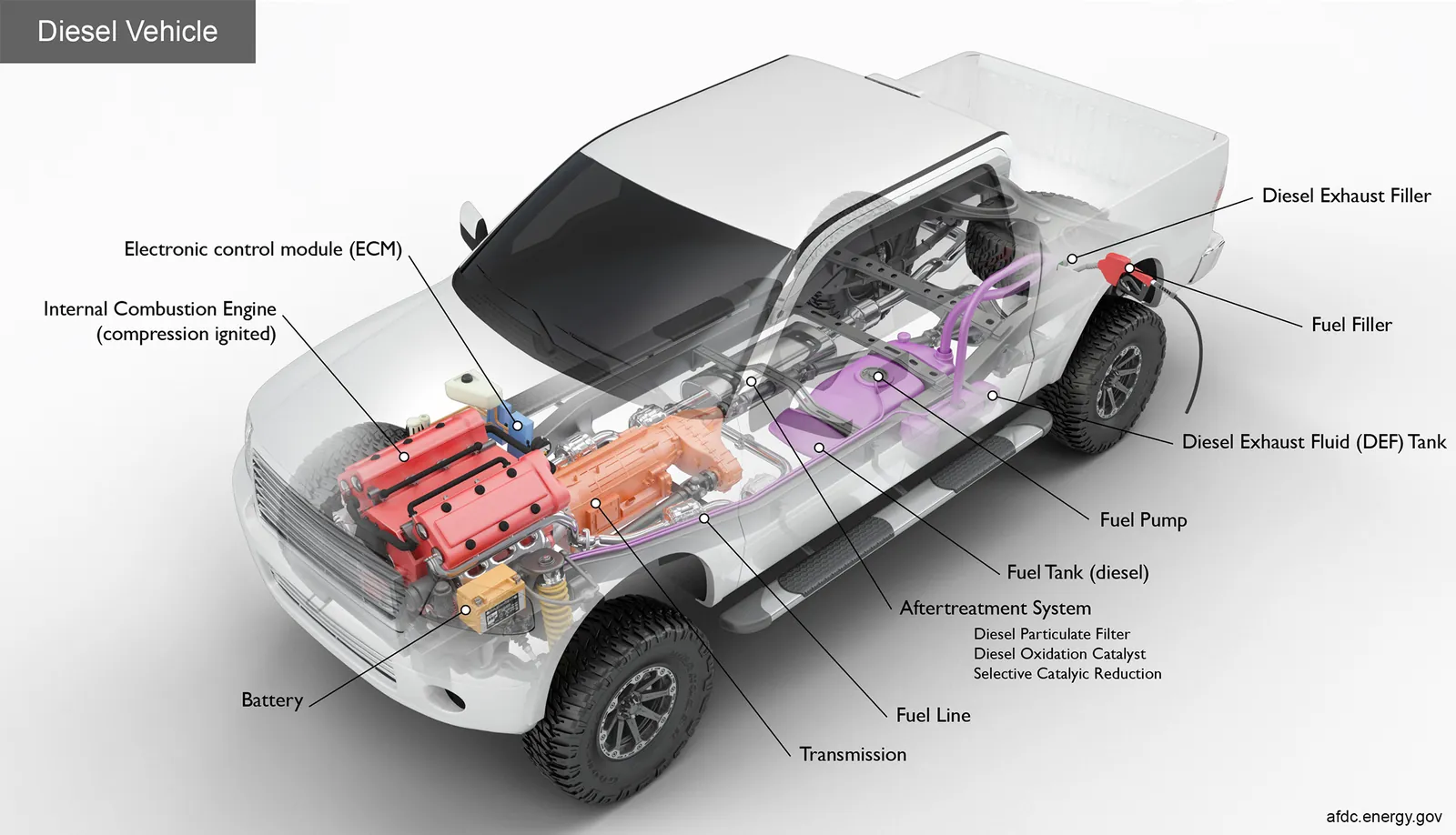
The video claims contaminated fuel from one bad tank can block your fuel filter in under 100 miles, but it doesn’t explain how to check fuel at the pump before purchasing, or how to determine if a station’s diesel is fresh. It does provide a method to evaluate a station without testing anything: choose crowded ones where diesel sells quickly, and steer clear of the station where you’re the only diesel customer and the diesel pump appears neglected. That’s the only test it provides.
It recommends fuel system cleaner when you suspect bad fuel, but it doesn’t name a type, a brand, or how much to add. What it does say is the order of operations: change your fuel filter and add the cleaner, and don’t wait once you notice rough running right after refueling. Catching contamination in the filter is what prevents the injector damage.
The repair and labor figures are given as ranges, and the video doesn’t say how a shop decides where in that range your bill lands. The ranges themselves hint at the variables. The $1,000 to $5,000 figure depends on how many injectors need replacement and whether the high-pressure pump survived. The $150 to $400 bleeding charge is labor only, and only if no components were damaged.
The video doesn’t say how long it takes to bleed a diesel fuel system, or whether a driver can do it at the roadside. It calls bleeding time-consuming and says it often requires professional service. If your diesel won’t start after running empty, don’t keep cranking. Continued cranking drains the battery and can damage the starter without solving anything.
It doesn’t cover what to do if you’ve already been running low for a while but the engine still starts and runs fine — whether any check is needed at that point. The video’s answer is forward-looking: never let the tank drop below a quarter full, ever, and refuel at the quarter mark. That keeps the pump submerged and cool and keeps air out of the system.
Frequently Asked Questions
Does hard acceleration right after refuelling damage a diesel engine?
No. The presenter says this is completely false. There’s no evidence that driving hard immediately after refuelling causes any damage whatsoever. Your fuel system doesn’t care whether the fuel in your tank has been sitting for an hour or was just added. Once fuel enters the system, it works the same way. The origin of this myth probably comes from concerns about sediment, which the presenter addresses separately. The act of accelerating hard after refuelling is completely harmless. Drive normally, drive aggressively — it makes no difference. Your diesel won’t care.
Does refuelling stir up sediment that clogs the fuel filter?
Not in a modern vehicle in regular use. Modern fuel tanks, especially plastic ones, don’t accumulate significant sediment under normal conditions. The fuel pickup sits at the bottom of the tank anyway, so it’s always drawing from the lowest point regardless of fuel level. Modern fuel quality control at stations means contamination is rare, and fuel filters are designed to catch any particles that do exist. Unless your tank has been sitting unused for years, there’s no significant sediment layer waiting to be disturbed. This was more relevant 40 to 50 years ago when fuel quality and filtration were less sophisticated.
Should I let my diesel idle after refuelling?
No. The presenter calls this completely unnecessary. Your fuel system circulates fuel constantly while the engine runs, so there’s no special settling period required after refuelling. Start your diesel and drive normally. No warm-up or circulation time is needed. This is one of three myths the presenter lists, alongside hard acceleration and sediment from the bottom of the tank.
Why is running a diesel tank low worse than running a petrol tank low?
Because diesel fuel systems are fundamentally different. Petrol engines can run until empty and restart after refuelling with minimal issues. Diesels cannot. When you run a diesel tank very low, two serious problems happen. First, the fuel pump overheats. The pump is submerged in the fuel tank, and the diesel fuel cools it. When the tank runs low, the pump is partially or fully exposed to air. Second, air enters your fuel system. Diesel fuel systems operate under suction from the tank to the injection pump, so a low tank lets the pickup tube draw air instead of fuel. Air in a diesel fuel system is catastrophic.
What happens if air gets into a diesel fuel system?
The injection pump and injectors are precision components operating at pressures up to 30,000 pounds per square inch, and they’re lubricated by the diesel fuel itself. When air enters the system, lubrication stops. The high-pressure pump runs dry, metal-on-metal contact occurs, and the pump damages itself. The injectors can seize. Getting air out requires bleeding, a time-consuming process that often needs professional service. Bleeding costs $150 to $400 in labor if nothing was damaged. If the fuel pump or injectors were damaged from running dry, repairs run $1,000 to $5,000.
How does bad fuel from a low turnover station cause problems?
Diesel fuel degrades over time. At stations with low diesel sales, fuel sits in underground tanks for months. Degraded diesel causes microbial growth — bacteria and fungi grow at the diesel-water interface in storage tanks, creating sludge that clogs filters and damages injectors. Diesel also forms heavy polymers that drop out as sludge, and this is accelerated in ultra-low sulfur diesel due to the removal of natural antioxidants. Underground tanks experience temperature changes, so water vapor condenses and accumulates at the bottom. Contaminated fuel from one bad tank can clog your fuel filter within 100 miles.
The decision you can make right now is simple: change how you refuel, starting with the next tank. Watch the fuel gauge, and when it reaches the quarter mark, fill up. At the pump, stop when it clicks the first time, then check that your cap clicks closed. Pick a station that sells a lot of diesel. Wash your hands before you get back in the car. None of this costs anything extra, and together they prevent the air-in-the-system failure that runs into thousands, the emissions repairs from overfilling, and the filter clogging that bad fuel brings. Follow these rules and your diesel will run trouble-free for hundreds of thousands of miles.
