

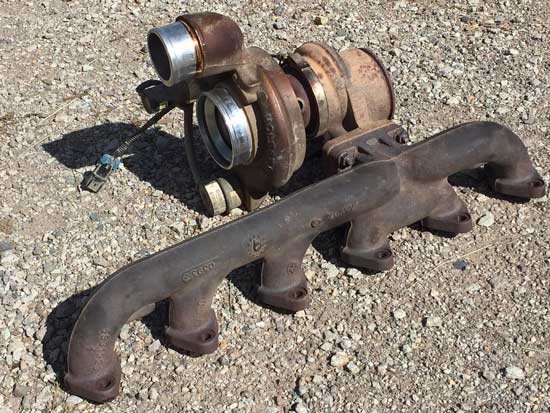
Shutting off a diesel engine right after a long highway drive is the mistake the video warns about. The fix is simple: let the engine idle for 1 to 2 minutes before you turn the key. That idle time keeps oil flowing to the turbo while it spins down and cools. Do it for 1 minute after normal highway driving, and for 2 minutes if you’ve been towing, climbing grades, or driving under load. The presenter says this small habit can add years to a turbo’s life, while skipping it can lead to a failure that costs $1,000 to $3,000 to fix.
What to Know Before You Start

- This doesn’t have to be done following each and every drive. Quick errands to the shop are okay to shut off right away, since the turbo doesn’t reach temperatures high enough to cause the same heat-related strain.
- The cool down is for sustained high-load use: highway driving, towing, mountain driving, or any long stretch under load.
- If you’ve been at highway speeds for more than 10 to 15 minutes, especially while towing or climbing grades, do the cool down.
- You can skip the driveway idle if you plan ahead. Driving gently at low load and low RPM for the last few miles does the same job.
- If you forget once or twice, don’t panic. The damage builds up over time, not in a single moment.
- Aim for the cool down on most of your highway drives, not all of them. Doing it 70 to 80% of the time still extends turbo life dramatically compared to never doing it.
- During the cool down, hold a slightly elevated idle for the first 30 to 45 seconds. That keeps oil flowing through the turbo while temperatures are at their highest, then let it settle back to normal idle.
- If you have an exhaust gas temperature gauge, use it instead of counting seconds. Wait until EGT drops below 300 to 400° F before shutting down.
- Some modern diesels run a turbo timer in the ECU, idling the engine automatically after you turn off the key. Most don’t, so check yours before assuming it’s handled.
Why Heat Soaks the Turbo After Shutdown
A turbocharger spins at extreme speeds. Under highway load, the presenter puts it at 80,000 to 150,000 revolutions per minute, and some modern turbos can go past 200,000 under heavy boost. The turbine side, driven by exhaust gases, can reach temperatures above 1,400° F. At those speeds and temperatures, the bearings generate a huge amount of heat, and the turbo depends on engine oil for both lubrication and cooling of the bearing surfaces.
When you shut the engine off right after a hard run, oil flow stops instantly. The residual heat doesn’t stop with it. It keeps building in the oil passages, and the oil trapped inside the turbo center housing gets cooked. That’s the core of the problem: the oil breaks down, forms carbon deposits, and eventually turns into coke.
Those deposits collect on the bearings and in the oil passages. They restrict flow, and restricted flow causes premature wear. Do it once and it’s not a big deal. Do it twice a week for a year and you’ve accelerated turbo wear significantly. Keep it up for 3 or 4 years and you’re looking at a failure that could have been avoided completely.
A lot of drivers claim that today’s water-cooled turbos render this unnecessary. According to the presenter, that’s only partially accurate. The majority of current turbos are equipped with water cooling jackets, and water cooling does indeed assist. However, it doesn’t fully solve the issue, particularly regarding oil breakdown.
On most current setups, water cooling keeps running for a short while after shutdown, yet it only cools the housing. It doesn’t prevent the oil from burning in the bearing areas, where temperatures remain very high.
Symptoms of a Turbo Going Bad
The damage shows up slowly, which is why so many owners miss it. The presenter lists the signs to watch for and what each one points to.
| What you notice | What it usually means | What to try first |
|---|---|---|
| Higher oil consumption | Oil is getting past worn turbo seals or bearings | Start the 1 to 2 minute cool down after every high-load drive |
| A faint whine under boost | Turbo bearings are wearing from heat and deposit damage | Check for a turbo timer in the ECU, or idle manually |
| Slightly reduced power | The turbo isn’t spinning or flowing as it should | Use an EGT gauge to guide cool down if you have one |
| Blue smoke from the exhaust | Oil is burning inside the turbo or exhaust path | Have the turbo inspected before the damage gets worse |
The presenter makes it clear that these symptoms appear slowly over time. Once they become noticeable, you’re already facing turbo replacement costs ranging from $1,000 to $3,000.
That slow arrival is the whole problem. One skipped cool down does almost nothing, so nothing you notice that day tells you anything. The harm is cumulative, not instant.
This is why the symptom list is a poor early warning system. It only becomes readable once enough drives have stacked up, and by then the deposits are already on the bearings.
So treat the symptoms as confirmation, not as your trigger. If you have been doing highway drives, towing, or climbing grades without a cool down, act on the driving history rather than on what you can hear or feel.
If you forget occasionally, don’t panic. Missing it once or twice won’t destroy your turbo. Getting it right on most of your highway drives, even 70 to 80% of them, still separates you from an owner who never does it.
Quick errands to the shop are a separate situation. The turbo doesn’t reach temperatures high enough to cause the same heat-related strain, so shutting it off right away is okay in that case.
The Cool Down Procedure, Step by Step
Decide whether this drive needs a cool down. Short trips and light driving don’t need one, because the turbo never gets hot enough. If you’ve held highway speeds for more than 10 to 15 minutes, or you’ve been towing or climbing grades, it does.
Keep the idle slightly raised for the first 30 to 45 seconds. This maintains proper oil flow through the turbo during the early portion of the cool down, when temperatures are at their peak. After that, allow it to return to a normal idle for the remaining time.
Idle for 1 minute after normal highway driving. The presenter says 1 minute is usually enough for light-load highway use. During that time the turbo spins down while still getting oil, the turbine housing temperature starts to normalize, and the oil keeps circulating instead of cooking in place.
Idle for 2 minutes after heavy work. If you’ve been towing, climbing grades, or driving aggressively, give it the full 2 minutes. That’s the difference between a turbo that cools properly and one that keeps baking its own oil.
Or begin the cool down before you get there. If home is 5 to 10 minutes away, slow down and drive with low load and low RPM for the final few miles. Take it easy through your neighborhood, drive gently, and avoid heavy acceleration. By the time you pull into your driveway, the turbo has cooled considerably, and you can shut down after a few seconds without causing damage.
Use an EGT gauge if you have one. A pyrometer or exhaust gas temperature gauge allows you to time the cool down based on temperature rather than the clock. Wait until the EGT falls below 300 to 400° F before shutting down.
Check whether your diesel has a built-in turbo timer. Some modern diesels have one in the ECU. Even after you turn off the key, the engine keeps idling on its own for a preset time before it shuts down. Most diesels don’t have this feature, so you’ll need to do it manually.
The presenter notes that this driving-style cool down is what many professional drivers prefer, because it feels more natural than sitting in the driveway waiting.
What the Video Leaves Open
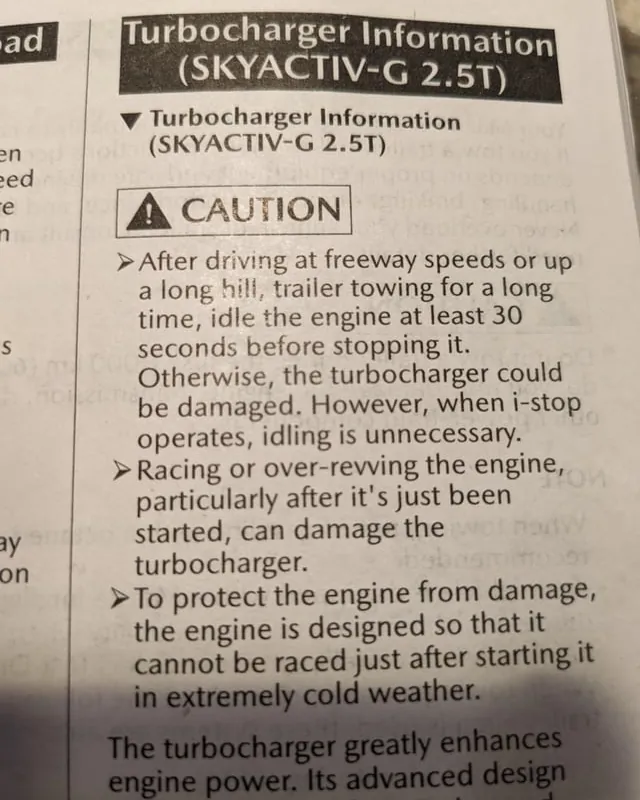
The presenter doesn’t say how long a turbo lasts if you never do a cool down, or how many months of the habit it takes before the damage becomes serious. The timeline is described only in general terms — twice a week for a year, then 3 or 4 years.
The video doesn’t cover what a turbo timer costs, how you’d know if your diesel has one, or how to set the preset time if it does. It only says some modern diesels have this feature in the ECU and most don’t.
There’s no guidance on what to do once the symptoms show up. The presenter names the signs and the replacement cost range, but doesn’t say whether a worn turbo can be rebuilt, cleaned, or repaired instead of replaced.
The exact fuel cost of a cool down is given as an estimate of maybe 3 to 5 cents per period. The video doesn’t break down how that number changes with engine size, idle speed, or fuel prices.
Nothing is said about whether the same procedure applies to gasoline turbo engines, or to diesels used in cold weather. The whole discussion stays on diesel.
The video doesn’t say how to check oil condition or how often to change it once deposits have started forming. It explains that oil coking is the problem but stops short of any maintenance schedule.
The one number the video does give you is the one that matters most for deciding whether to bother: 3 to 5 cents of fuel per cool down, against $1,500 to $3,000 for a replacement including labor. That gap is the whole argument, and it holds even if your engine is bigger or your fuel costs more.
The presenter also draws a line the video never blurs. Short trips to the store don’t need a cool down, because the turbo never gets hot enough to create the thermal stress. The procedure is for highway driving, towing, mountain grades, or any sustained high-load run.
The clearest trigger in the source is time at speed: if you’ve held highway speeds for more than 10 to 15 minutes, especially towing or climbing, do the cool down. Below that, immediate shutdown is fine.
If you have an exhaust gas temperature gauge, there’s no need to guess at the idle time at all. Wait until the EGT falls below 300 to 400° F before shutting down.
Forgetting once or twice won’t destroy anything. The damage is cumulative, not instant, so the goal is a habit across most of your highway drives — even 70 to 80% of the time is far better than never.
Frequently Asked Questions
Do I need to idle my diesel after every drive?
No. The presenter makes it clear that short trips and light driving don’t require a cool down. If you’re just running to the store, shutting off immediately is okay, because the turbo doesn’t reach temperatures high enough to cause the same heat-related strain. The procedure applies to highway driving, towing, mountain driving, or any sustained high-load operation. As a rough guide, if you’ve been holding highway speeds for more than 10 to 15 minutes, especially while towing or climbing grades, do the cool down. Everything else can be shut off normally.
How long should I let it idle?
One minute is typically sufficient after ordinary light-load highway driving. If you’ve been towing heavy, climbing grades, or driving aggressively, let it idle for 2 minutes. That’s 60 to 120 seconds of idle time, and the presenter says that’s all that’s needed. During that window, the turbo gradually spins down while still receiving oil, the extreme temperatures in the turbine housing begin to normalize, and the oil keeps circulating so it doesn’t burn in the bearings.
Is water cooling enough on its own?
Partly, but not completely. The majority of current turbos are equipped with water cooling jackets, and they do help manage temperatures. The presenter says water cooling assists but doesn’t fully solve the issue, particularly regarding oil breakdown. On most current setups, water cooling keeps running for a short while after shutdown, yet it only cools the housing. It doesn’t prevent the oil from burning in the bearing areas, where temperatures remain very high. That’s why turbocharger manufacturers still recommend cool down periods in their technical documentation, even for water-cooled designs.
Can I cool the turbo down while I’m still driving?
Yes, and a lot of professional drivers favor this approach. If you know home is about 5 to 10 minutes away, begin the cool down while on the road. Slow down and drive with low load and low RPM for the final few miles. Take it easy through your neighborhood, drive gently, and avoid any heavy acceleration. This lets the turbo spin down and cool while oil is still flowing. By the time you pull into your driveway, it has already cooled considerably, and you can shut down after a few seconds without causing damage.
What happens if I forget once in a while?
Don’t panic. The presenter says missing the cool down once or twice won’t destroy your turbo. The damage is cumulative, not instant. If you forget, just remember next time. The goal is to make this a habit for most of your highway drives, not to be perfect 100% of the time. Even doing it 70 to 80% of the time will dramatically extend your turbo’s life compared to never doing it at all. Consistency over months and years is what matters, not a single missed idle.
How much does the cool down actually cost?
Very little. The presenter estimates maybe 3 to 5 cents worth of fuel per cool down period. Against that, a turbo replacement runs $1,500 to $3,000 including labor, and the earlier figure given for the part alone is $1,000 to $3,000. The presenter frames the whole thing as one of the cheapest and easiest ways to extend turbo life. Diesel mechanics who see the inside of failed turbos every week say most of those failures are preventable with proper shutdown procedures.
Your next highway drive is the test. When you pull in and your hand reaches for the key, wait. Let the engine idle for 90 seconds. Use the time to gather your things, check your phone, or just sit for a moment. That’s the whole habit, and the presenter says it’s the difference between a turbo that serves you for years and one that fails early. You don’t have to be perfect — doing it most of the time is what counts.
