

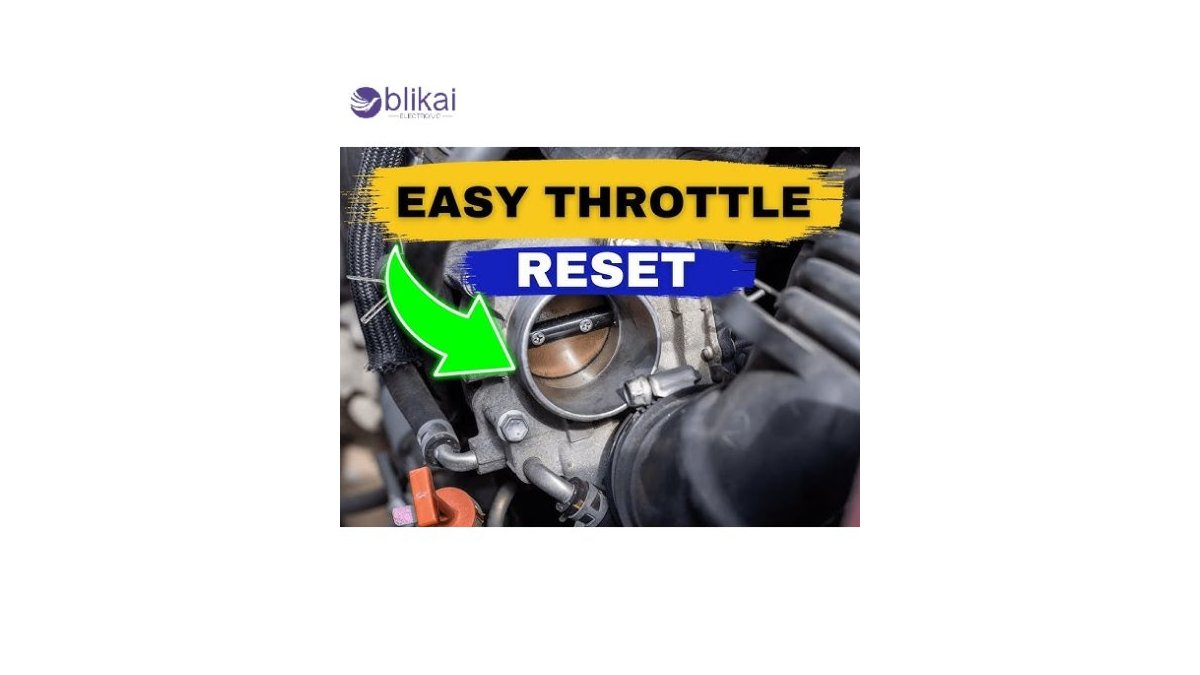
You can reset a throttle position sensor (TPS) using four specific methods that don’t require professional tools. These techniques address issues like engine hesitation, rough idling, stalling, or a check engine light by clearing the computer’s learned values. The primary methods include disconnecting the battery, performing an ignition cycle reset, executing a throttle range relearn, or using an OBD2 scanner. Each process requires idling the engine for a specific duration afterward to allow the vehicle’s computer to recognize the new settings. By following these steps, you can often restore smooth acceleration and improve overall engine performance without paying for a mechanic’s visit.
Getting Ready for Your Reset

Before you begin, ensure you have the correct environment for the task. The presenter suggests these preparations:
- Work on a completely cold engine if you’re performing the throttle range relearn.
- Locate the negative terminal on your battery, which is the black cable marked with a minus sign.
- Ensure your vehicle is turned off completely before starting the battery disconnect method.
- Identify the diagnostic port, usually found under the dashboard near the steering column, if using a scanner.
- Have an OBD2 scanner available if you choose the diagnostic tool method.
Procedures for Calibrating Your Sensor
You can use these methods to reset your sensor settings. Follow the specific steps for each approach carefully.
Battery disconnect: Detach the negative terminal wire and verify it remains clear of any metal surfaces. Allow 5 to 10 minutes for the system memory to clear. Attach the wire again, ignite the motor, and maintain a steady idle for a minimum of 5 minutes while keeping your foot off the accelerator. 2. Ignition cycle: Turn the key to the “on” position without starting the engine. Wait for the dashboard lights to finish their cycle. Press the accelerator to the floor for 5 seconds, then release it. Turn the ignition off for 10 seconds. Repeat this process two more times, then start the engine and idle for 5 to 10 minutes. 3. Throttle range relearn: With a cold engine, turn the key to the “on” position. Cycle the gas pedal from fully closed to fully open slowly, taking 3 to 4 seconds for each direction. Repeat this 3 to 5 times. Turn the ignition off for 10 seconds, then start the engine and let it idle. 4. Scanner reset: Plug an OBD2 scanner into the diagnostic port and turn the ignition to “on.” Navigate to the “ECU reset” or “clear learned values” menu. Follow the on-screen prompts to reset the sensor. Turn the ignition off, then start the engine and let it idle to finish the process.
Essential Settings and Timing
The following table outlines the timing and repetition requirements for the manual reset procedures.
| Method | Duration or Repetitions | Purpose |
|---|---|---|
| Battery Disconnect | 5 to 10 minutes | Allow computer to reset |
| Battery Idle | At least 5 minutes | Relearn idle position |
| Ignition Cycle Hold | 5 seconds | Register pedal position |
| Ignition Off Time | 10 seconds | Clear cycle |
| Ignition Cycle Count | 3 times | Complete reset cycle |
| Throttle Range Speed | 3 to 4 seconds | Controlled movement |
| Throttle Range Count | 3 to 5 times | Relearn range |
| Throttle Range Off | At least 10 seconds | Final reset |
Common Reset Mistakes
Will a quick battery disconnect work?
The presenter advises waiting 5 to 10 minutes when disconnecting the battery. If you don’t wait long enough, the car’s computer may not have enough time to finish the reset process.
Is it okay to touch the pedal during idle?
During the relearning phase, you must not touch the gas pedal. Touching the pedal while the engine is idling prevents the computer from correctly learning the idle position.
How fast should I move the pedal?
During the throttle range relearn, you must move the pedal slowly. Moving it too quickly, rather than taking 3 to 4 seconds in each direction, can interfere with the relearning process.
What the Video Leaves Open
- The video doesn’t provide a list of specific vehicle makes or models that are incompatible with these reset methods.
- There’s no information regarding what to do if the OBD2 scanner fails to communicate with the car’s computer during the reset attempt.
- The presenter doesn’t explain how to identify if your throttle body is dirty, or if cleaning it’s a necessary prerequisite to a successful sensor reset.
- The video doesn’t offer guidance on what to check if the check engine light remains on after you have attempted all four reset methods.
- There’s no mention of the total time investment required if you have to perform multiple attempts or if you need to troubleshoot a failed sensor.
Related guides
- How to reset Ford transmission control module TCM
Frequently Asked Questions
How do I know if the reset worked?
You should notice smoother acceleration and better idle quality after completing the process. The presenter also suggests taking the car for a test drive to verify the results. If the engine performs better, the reset was likely successful. Improved fuel economy is another potential benefit you might observe after the sensor has been properly recalibrated.
What should I do if the engine issues continue?
If your car continues to hesitate or stall after trying all four methods, the sensor itself might be faulty. In this case, it may be time to replace the sensor or consult a professional mechanic. The presenter emphasizes that these reset methods are a starting point to avoid unnecessary repairs, but they can’t fix a physically broken component.
After you have completed one of these reset procedures, take your vehicle for a short drive. This allows the car’s computer to finalize the new settings under real-world driving conditions. If the engine performance improves, continue with your regular driving routine. Always remember that keeping your throttle body clean and performing these resets can help extend the life of your engine. If you’re still experiencing issues, consider seeking professional advice rather than attempting to force a reset on a damaged part. Start with the battery disconnect method as your first step, as the presenter identifies it as the simplest option for almost any vehicle.
