

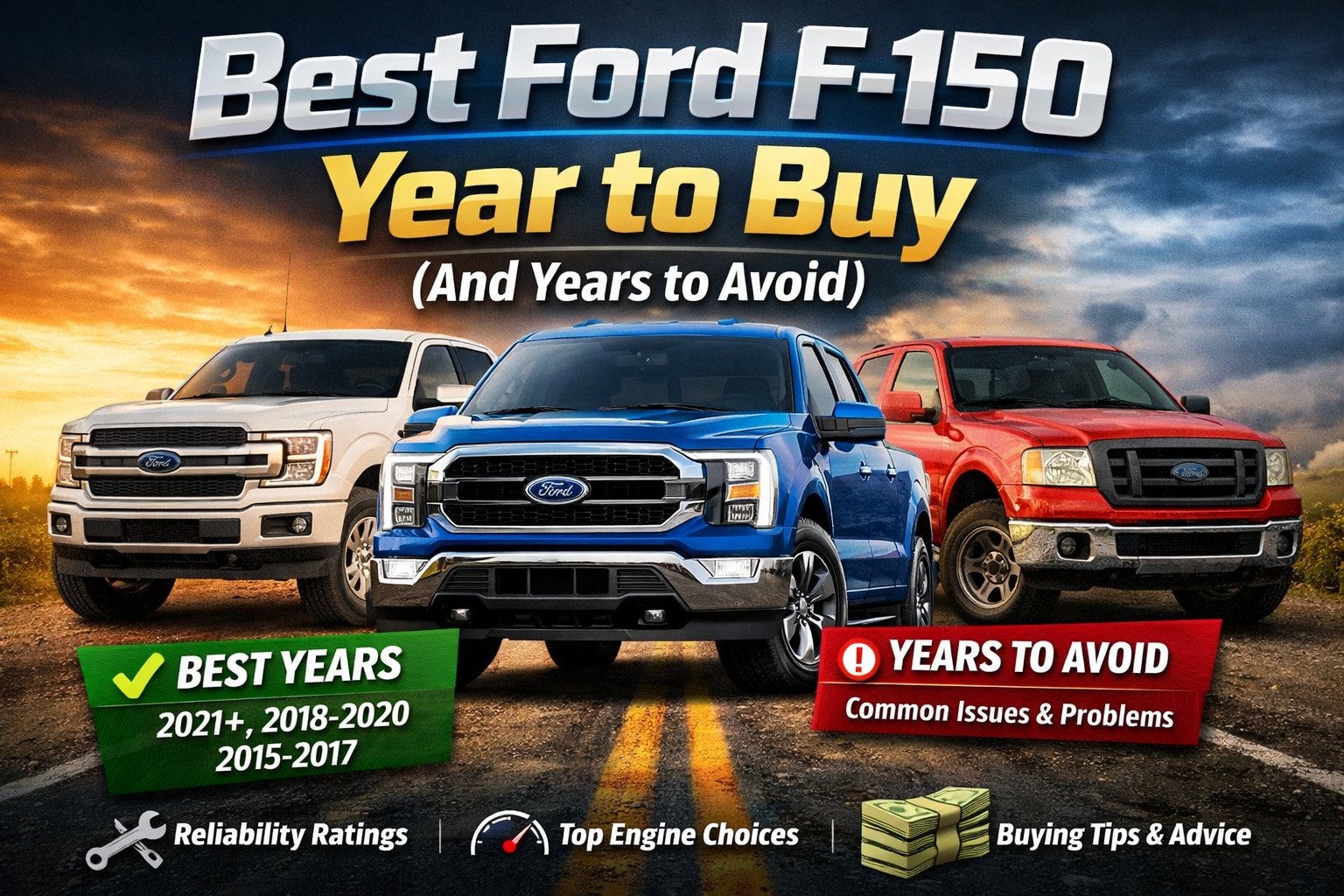
If you’re shopping for a used Ford F-150, choosing the right model year is essential for long-term reliability. While some years are known to reach 300,000 miles with basic maintenance, others suffer from expensive mechanical flaws that can quickly drain your bank account. The best model years, such as the 2018 to 2020 range or the 2013 to 2014 period, offer proven reliability and fewer owner complaints. Conversely, you should approach early production years like 2021 or the 2010 model with caution, as these trucks often face significant engine, electrical, or quality control issues. Understanding these distinctions helps you avoid costly repair bills and ensures you get a truck that serves as a reliable backbone for your work and daily needs.
Choosing the Best Reliable Truck Years
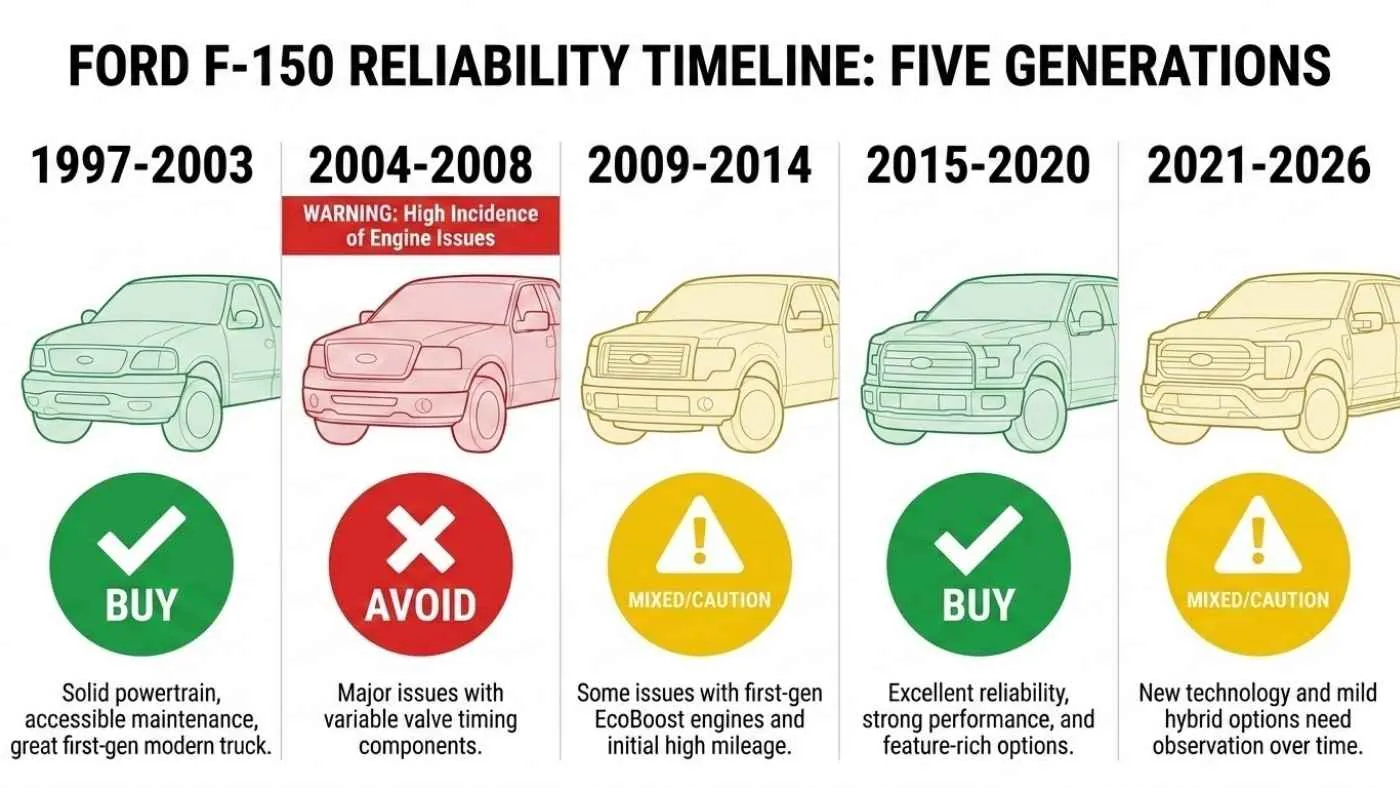
If you want the most reliable experience, then prioritize models that feature refined engineering and proven technology. According to the presenter, the 2018 to 2020 F-150s are the standout choice, representing the peak of the 13th generation. By these years, Ford had successfully resolved the early issues related to aluminum bodies and 10-speed transmission programming. The walkthrough highlights that these models received high reliability ratings from data sources like Consumer Reports.
For those seeking a slightly older truck, the 2013 to 2014 models are considered the pinnacle of the 12th generation. The presenter notes that these years provide a balance of modern amenities and durability, particularly when equipped with the 5.0 L Coyote V8 engine.
Additionally, the 2001 to 2003 models remain a top choice for buyers who value simplicity. Because they use a two-valve engine configuration and have fewer complex electronic systems, they’re easier to maintain and highly durable. Finally, the 2009 F-150 with the 4.6 L engine is described as a “sleeper pick” that offers modern design benefits without the mechanical risks of the 5.4 L engine.
Top Strengths of Recommended Models
- The 2018 to 2020 models feature the reliable second-generation 3.5 L EcoBoost engine, which solved earlier timing chain and turbo problems.
- The 6R80 6-speed automatic transmission found in 2013 to 2014 models is widely regarded as one of the most durable transmissions Ford has produced.
- The 2001 to 2003 trucks utilize a simpler two-valve 4.6 L V8 engine that avoids the design flaws of later three-valve engines.
- Modern 2018 to 2020 trucks include advanced, stable technology like the Sync 3 system and improved safety features.
- The 2009 F-150 with the 4.6 L engine provides improved interior quality and ride comfort compared to earlier generations.
- Early data suggests 2023 and newer models have addressed the electrical and hybrid powertrain issues that affected the 2021 launch.
Known Weaknesses and Problematic Years
- The 2010 F-150 is plagued by the 5.4 L 3-valve engine, which is associated with expensive cam phaser failures and startup rattles.
- Owners of the 2010 model frequently report broken door handles and master cylinder failures that impact braking performance.
- The 2021 F-150 suffers from various electrical glitches and infotainment system issues as a result of being the first model year of a new generation.
- Early adopters of the 2021 PowerBoost hybrid system experienced specific problems related to that cutting-edge technology.
- Quality control challenges in the 2021 model led to several recalls, including concerns regarding windshield bonding and the drive shaft.
- The 2010 model is prone to rear window leaks that can cause damage to the truck’s interior electronics.
Who Should Buy and Who Should Skip
The presenter suggests these trucks for different types of buyers based on their mechanical needs and budgets. If you’re a budget-conscious buyer who prefers to perform your own repairs, the 2001 to 2003 models are ideal because they don’t require specialized computer diagnostic tools. These trucks are also great for those who prioritize long-term durability over modern creature comforts.
On the other hand, drivers who want modern technology, advanced safety systems, and a refined driving experience should look toward the 2018 to 2020 models. These trucks are best for owners who want to minimize the risk of frequent mechanic visits while still enjoying current features.
You should skip the 2010 model entirely unless you have an unlimited repair budget, as the inherent engine design flaws are costly to address. Similarly, avoid the 2021 model if you want to bypass the “growing pains” common to the first year of a major vehicle redesign, especially with superior 2022 and 2023 versions now available on the market.
What the Video Leaves Open
- The presenter doesn’t provide specific guidance on how to inspect a used truck’s maintenance records to verify that a previous owner addressed known issues.
- The video doesn’t detail the specific, step-by-step diagnostic process a buyer should perform before finalizing a purchase.
- There’s no information regarding how many miles are considered “too many” when purchasing a used F-150, even for the most reliable years.
- The video doesn’t explain how to distinguish between different trim levels or how these trim options might affect the overall reliability of the vehicle.
Related guides
- Subaru Forester years to avoid and best models to buy
Frequently Asked Questions
Is the 5.4 L engine always a bad choice?
The presenter identifies the 5.4 L 3-valve engine as a primary reason to avoid the 2010 F-150. This engine is associated with fundamental design flaws, including cam phaser problems that lead to a “dreaded startup rattle” and signify the need for expensive repairs. While the video highlights that Ford attempted to address earlier issues by 2010, the engine remained problematic throughout its run. If you’re considering a truck from this era, the presenter advises looking for a 2011 or newer model to access more reliable engine options like the 5.0 L Coyote V8 or the 3.5 L EcoBoost.
Why should I avoid the first year of a new generation?
The 2021 F-150 serves as an example of the risks involved in buying the first year of a major redesign. The presenter notes that these models often suffer from quality control challenges, which in this case were compounded by the semiconductor shortage and the pandemic. Owners reported electrical problems, infotainment glitches, and issues with the new hybrid powertrain. These first-year models frequently require multiple recalls to fix initial manufacturing errors. The presenter suggests that there’s little reason to accept these risks when improved versions are available in the following model years.
Are older F-150s cheaper to maintain?
Yes, the presenter explains that older models like the 2001 to 2003 F-150 are often more affordable to own. These trucks feature simpler electrical systems, which results in fewer potential failure points and prevents the need for costly electronic repairs as the vehicle ages. Furthermore, the presenter notes that parts for these older generations are plentiful and affordable. Because these trucks predate modern, complex computer systems, most repairs can be performed by DIY mechanics without the need for specialized diagnostic tools.
When searching for your next truck, focus your search on the 2018 to 2020 model years if you want a balance of modern features and proven reliability. If those are outside your price range, consider the 2013 to 2014 models for their excellent durability and refined 6-speed transmissions. For those on a stricter budget, a well-maintained 2001 to 2003 truck offers a simple, reliable alternative that avoids the complexities of newer electronics. Always aim to skip the 2010 model and the 2021 first-year redesign to avoid the most common mechanical headaches and repair costs. By narrowing your search to these recommended years, you can make a more informed decision and find a truck that provides years of dependable service without unexpected visits to the mechanic.
